
Charlie Perez-Tlatenchi & Jane Ursula Harris
Collapsing the World Into Diasporic Images
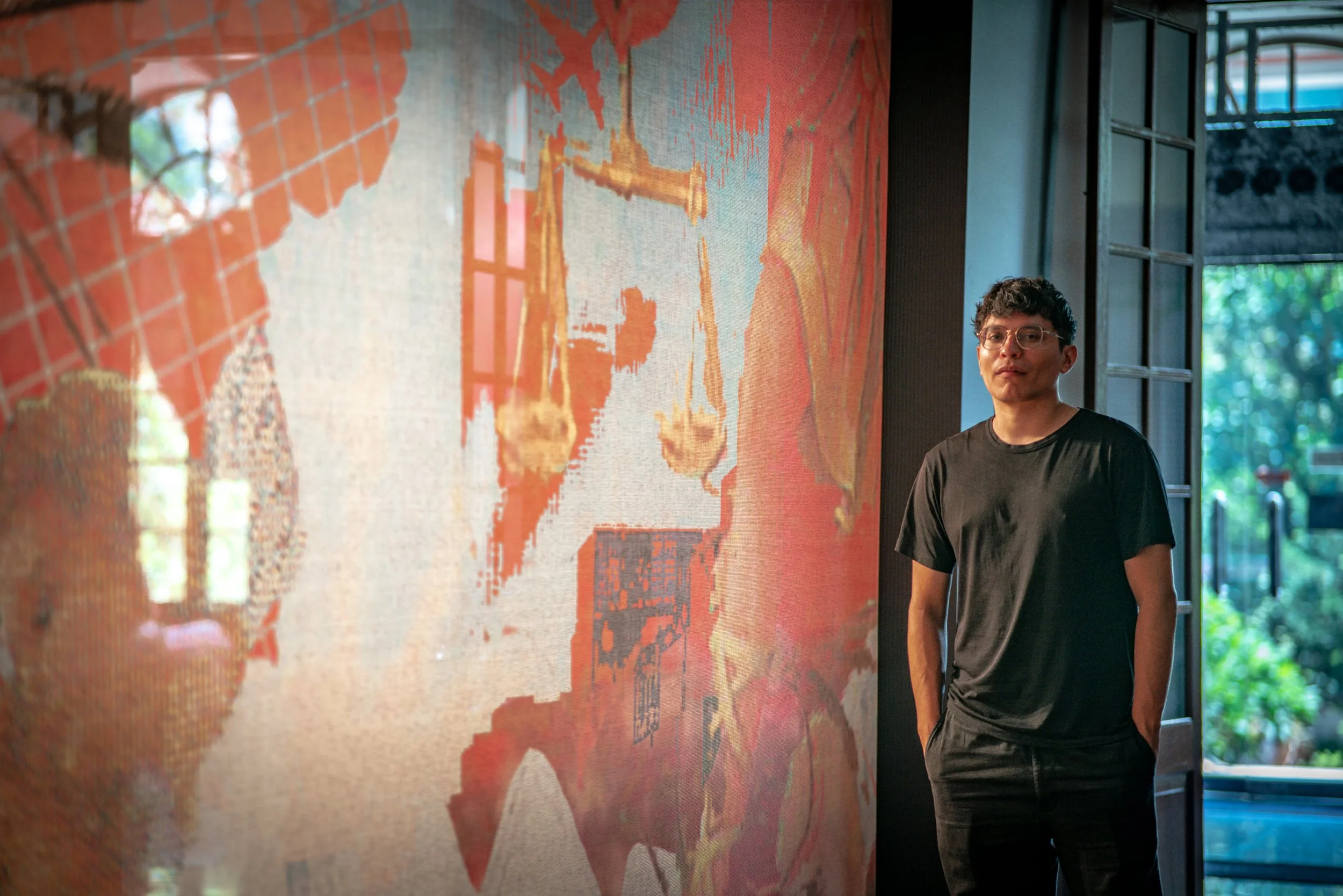
The son of Mexican immigrants, Charlie Perez-Tlatenchi’s story is that of a quintessential first generation native New Yorker. Raised in Sunset Park, Brooklyn during the 1990s and aughts when there was a massive influx of immigrants from Latin America and China, he grew up speaking Spanish until he attended school. The multimedia artist’s early photo-based collages and interest in the visual vernacular of street life bear the imprint of this vibrant mix of cultures. So too can one find the palimpsests of his experiences in the city’s DIY noise and metal scene he came of age in (marked by densely layered sounds) and his involvement in the Occupy Wall Street movement, which helped politicize his understanding of art’s potential.
By the time Perez-Tlatenchi got his MFA in Photography at Bard, his practice had begun to visualize a broader sense of the world through dedicated research to the histories of globalization. Traveling to places as far flung as Mexico, Asia, and Palestine, he traced trade routes connecting China to the Americas through the demand for silver, and limned the ways Catholicism paradoxically functioned to justify colonialism and survive it. Through a formal relationship to photography that increasingly incorporates sculptural elements and commercial methods, his work continues to limn the diasporic condition through compositions that resist legibility and are never fixed.
Today the artist lives and works in Dyker Heights, a Brooklyn neighborhood that has yet to be swept up by the gentrifying forces that have already transformed Sunset Park. He shares his life there with his Taiwanese-Brazilian wife and baby girl. As we sat down in his studio to talk, we discussed his trajectory as an artist and what he’s working on now.
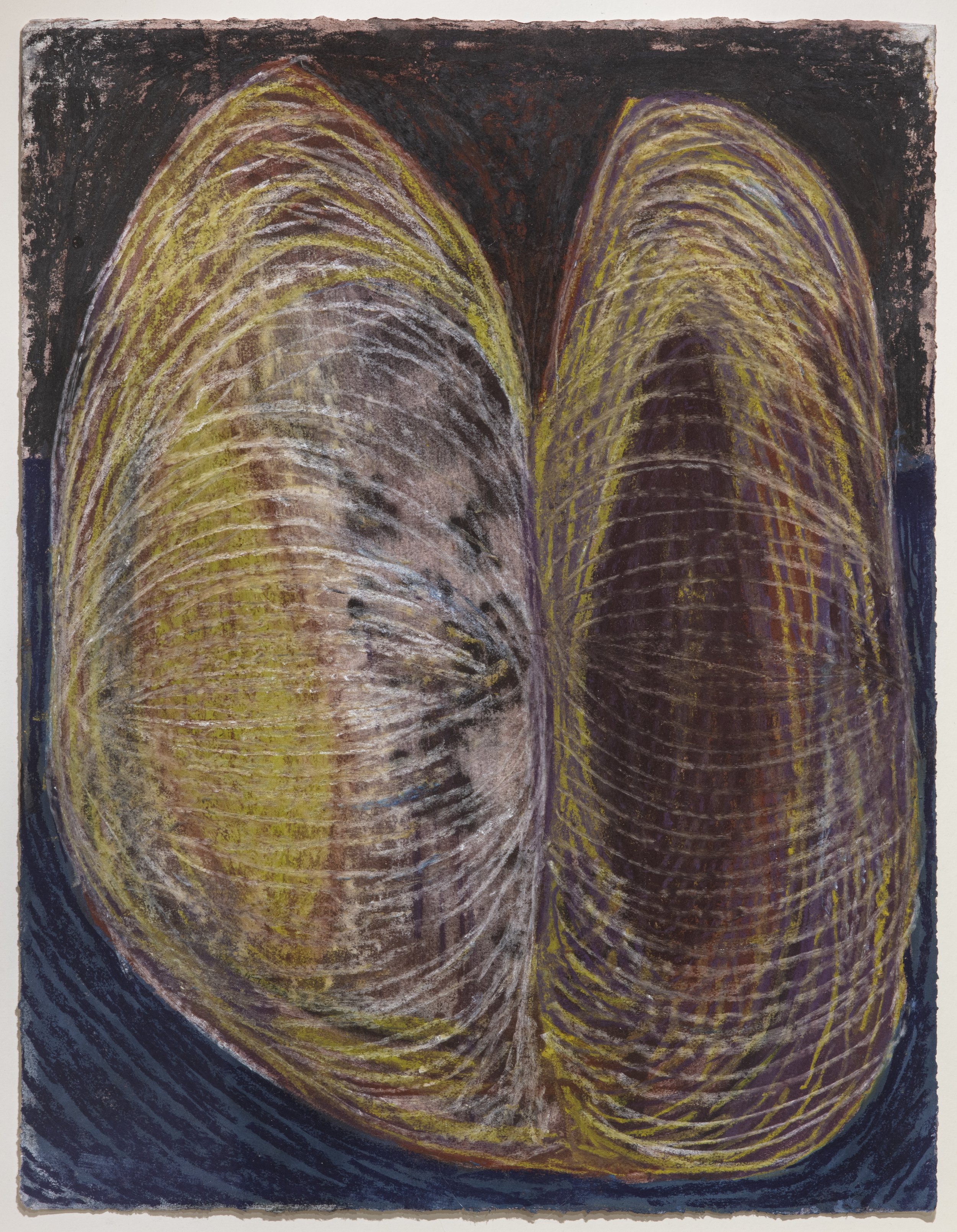
Cocoon, 2024, Charcoal on paper, 26 x 20 in Image courtesy of the artist and CHART Gallery
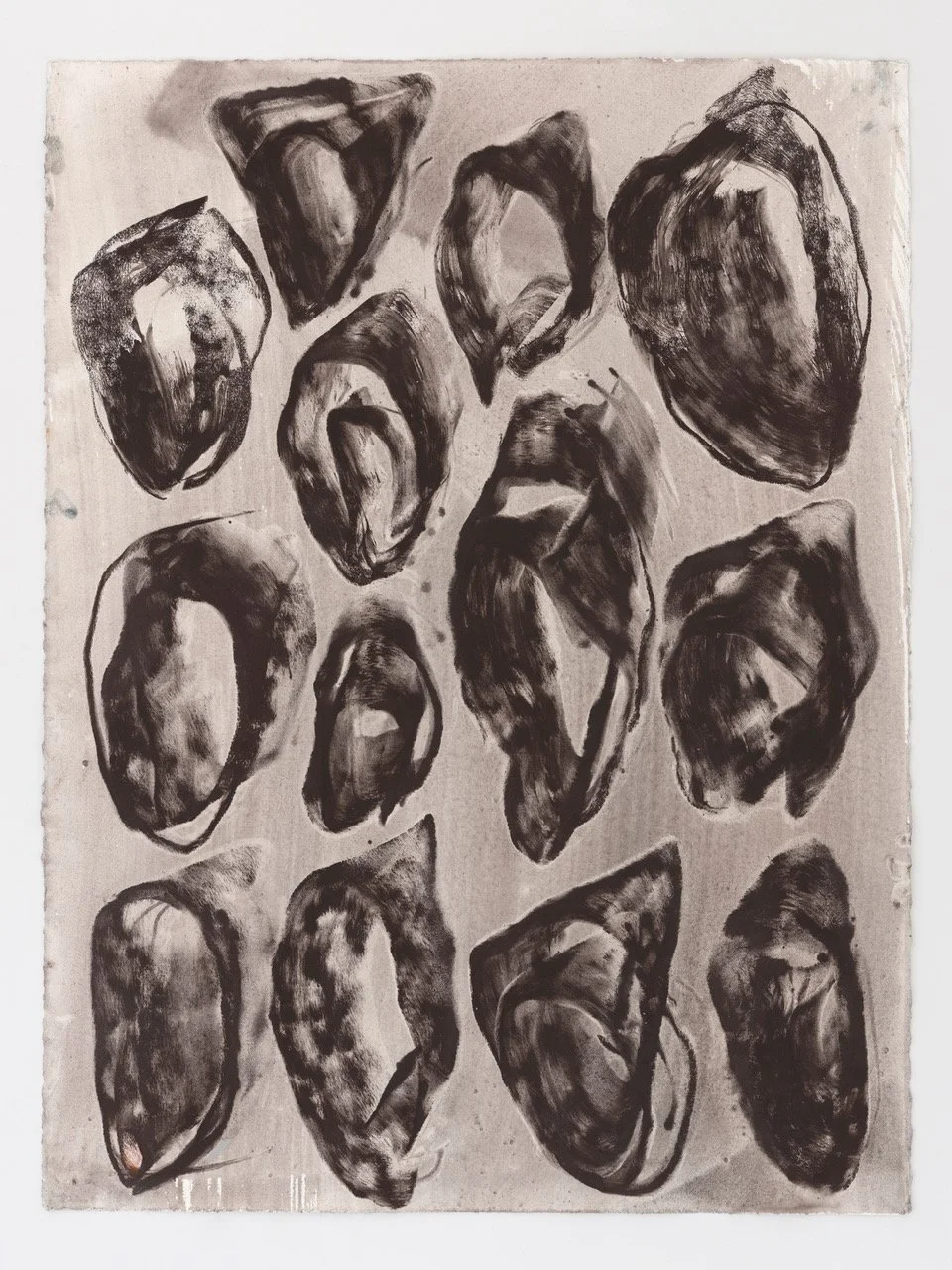
What I hold, 2023, charcoal on paper, 30 x 22 in Image courtesy of the artist and CHART Gallery
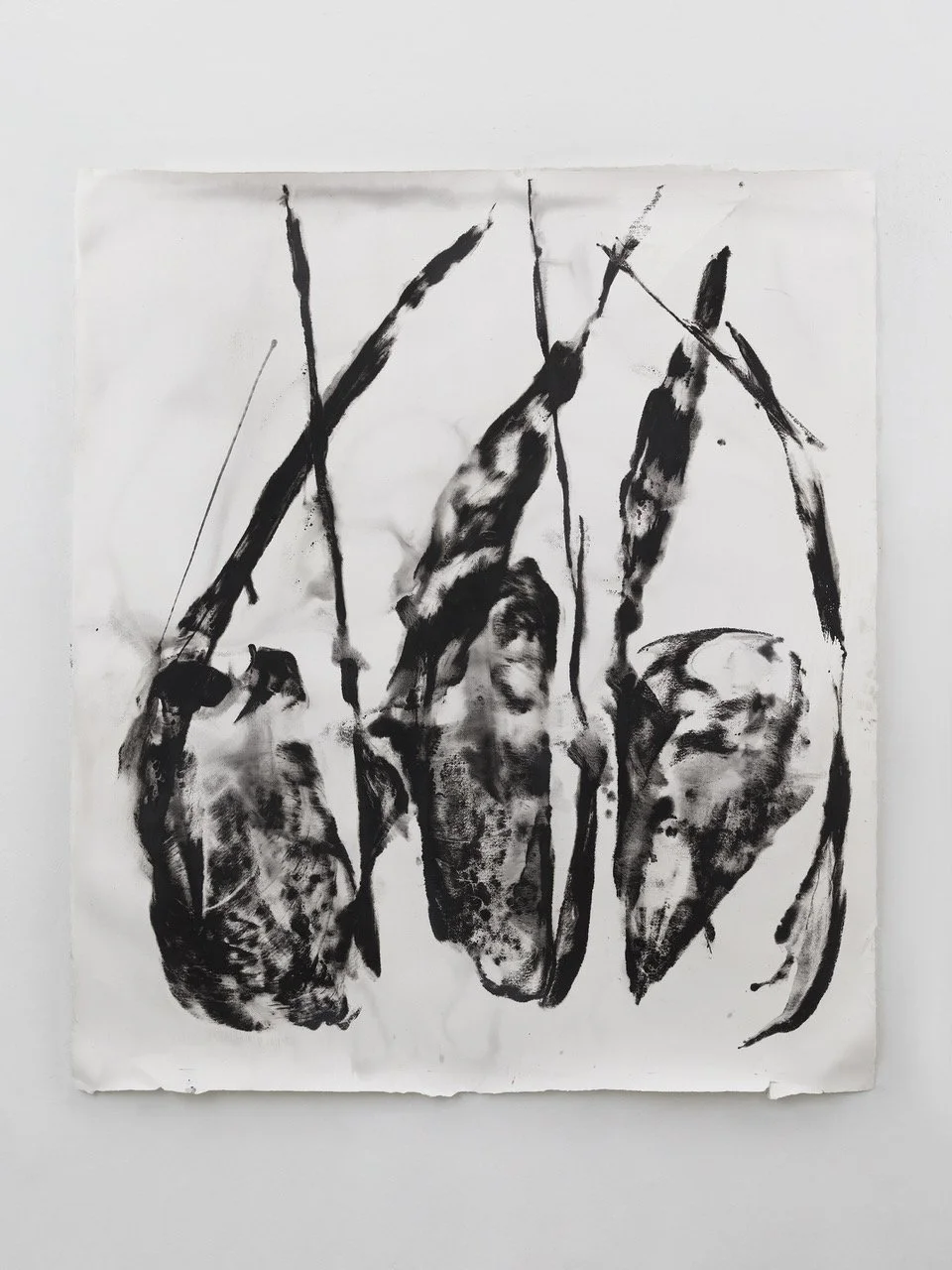
The weak will soon be strong, 2023, charcoal on paper, 51 x 44 1/2 in Image courtesy of the artist and CHART Gallery
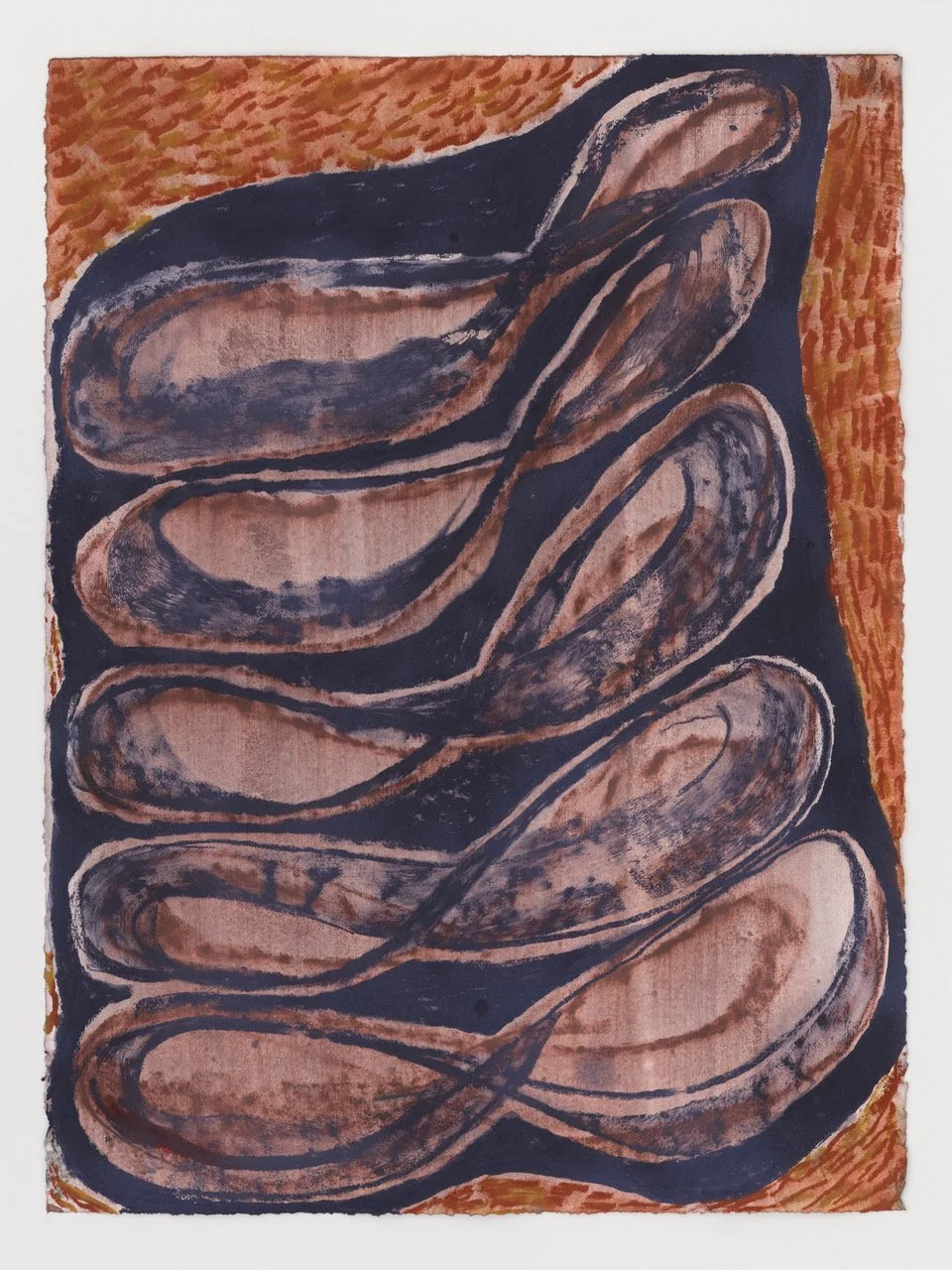
Finding the future, 2023, charcoal on paper, 30 x 22 1/4 in Image courtesy of the artist and CHART Gallery
Why, given this intellectual legacy, does Oldenburg purvey such a rough beauty, a formal control that is firmly shape-guiding but not systematic or absolute? Why do so many of her pieces look extruded, like disdained industrial by-products?
In part, her choice is governed by the critical convention that associates formal roughness with emotional sincerity. Around 1900, Swiss art historian Heinrich Wölfflin changed the interpretation of Michelangelo’s Slaves, those writhing muscular figures still partially encased in marble blocks, designating them not unfinished refuse but intentionally expressive works, a reading taken up by Rodin for his own inchoate figures and subsequently applied to every form of art. Roughness equals honesty and emotional intensity; precision and high-finish bespeak repression—that is the mental calculus that has passed down through the Beats and others to artists and critics today. We often suspect there is something false and close-minded about perfectly refined work. The virtuoso artist, we fear, is restating the already known or believed, not hazarding his soul to adventure.
Oldenburg’s salvage-yard expressionism, on the other hand, combines modernist “truth to materials” with Romanticism’s “truth to feelings.” Her refusal of formal definitiveness, the amorphousness of her objects and images, suggests that our relation with the world is dynamic and therefore perpetually tentative, subject to erasure and change. As biological entities endowed with consciousness—animals acutely aware of our own pleasure and pain, life and death—we can see Oldenburg’s works as emblems of our perpetual flux.
Her core subject is the ambivalence we feel about material abundance and its attendant waste. Freud located the origin of this psychological divide in early toilet training, wherein children, who at first feel only pride and curiosity about the pungent matter they produce within themselves and expel, their first tangible gift to the world, soon learn—at the prompting of adults, of “civilization”—to view it with shame and disgust. This affective opposition generates energy, the charge that drives (among other things) creative endeavors. We cannot settle on a single reaction to waste; instead, we vacillate, our art vacillates, between contradictory poles.
On a societal level, think of the joy in excess, the Nietzschean will-to-power, once betokened by billowing factory smokestacks, by snapshots of hunters and sport fishermen displaying hordes of slaughtered wildlife, by the 19th-century near extermination of the American Buffalo. Only now, since the advent of ecological consciousness, do we look back in horror at the toxic smog hat once hung over Pittsburgh, or the acres of rotting bison carcasses that besmirched the Old West.
And yet our ambivalence remains. The logic of capitalism—based on horror vacui and the illogic of infinite growth—urges us to consume (and therefore to produce) to the point of satiation and beyond. The world must be filled, and the self must be fulfilled, through a plentitude of commercial products. How many times has a picture of jammed American supermarket shelves been used to signify the rightness of our economic imperative? In part, this appeal is tinged with elements of the Sublime propounded in the 18th century by Immanuel Kant and Edmund Burke— an attraction to the at once intimidating and alluring “terribleness” of immense size, power, and mystery. But it carries as well a hint of the child’s—which is to say every human being’s—
secret love of personal bodily secretions,
sublimated, according to Freud, into art: the impulse that prompted Piero Manzoni to can and sign his excrement, Judy Chicago to work with menstrual blood, and Carolee Schneemann to read from a printed strip pulled progressively from her own vagina.
It is a fundamental, ineradicable ambivalence that puts Oldenburg in dialogue with some of the most richly provocative artists of the postwar period: Abstract Expressionism (“What is this shit? My kid could do that”), Asger Jorn and the CoBrA movement, Chicago Imagism, Funk Art, Eva Hesse, Art informel, Yayoi Kusama, Lee Bontecou, Louise Bourgeois, Louise Nevelson, Kiki Smith, Arte Povera, Mary Kelly, Paul McCarthy, Michael Landy, Subodh Gupta, Anicka Yi—there is an entire compare-and-contrast dissertation waiting to be written. Key to this dialogue is Oldenburg’s respect for the affection, conscious or unconscious, that many people feel toward certain substances and objects. Think, she urges us, of children’s attachments to teddy bears, or adults’ gratitude to material things that facilitate our daily lives (e.g., the air filters in Hopes and Dreams, 2023), alleviate our distress (the Tylenol capsules in High Tide, 2023 ), or give us pleasure (the coffee grounds in The Old Ones, 2025).
In one sense, Oldenburg’s work chimes with the traditional Japanese wabi-sabi aesthetic, which finds beauty and a hint of worldly wisdom in things that are old, imperfect, broken, or visibly repaired—the most vivid example being shattered pottery that is restored with veins of gold conjoining the fragments. (“The world breaks everyone,” Hemingway wrote, “and afterward many are strong at the broken places.”) The difference is that Oldenburg makes her trash elements into something other than the original, something artistic and new yet disconcertingly familiar. Thus Body Brace (2021) incorporates doormats; Apex Predator (2023), cell-phone cases; Fade (2023), remote controls, etc.
Oldenburg, highlighting her method’s imaginative fertility, calls it “an erotics of accumulation.” But there is no eroticism without raunch—without “filth,” literal or metaphorical. What to do about our inevitable spillage of both energy and substances, and about the ambiguity—at once exultant and rueful—we feel about it? One option, available to the blessed few, is to make art of our untidy enchantment.
Perhaps this is why Oldenburg’s works evoke gross fluidity but do not actually ooze. They are, in effect, the informe petrified, a reminder that our castoffs—substances and objects, compulsions and dreams—will be with us always and must, therefore, be consciously wrangled. Life is quick; its hard facts, physical and psychic, are too often suppressed into current denial and future catastrophes. But Oldenburg invites us instead to stop, perceive, and take honest stock of the paradox that transfixes us. She is no firebrand but a cultural critic whose observations assume plastic form, an artist who quietly conveys a galvanizing cultural critique.