Sadaf Padder

“Belonging is something assembled through stories, objects, and memory rather than a fixed place.”

— Sadaf Padder

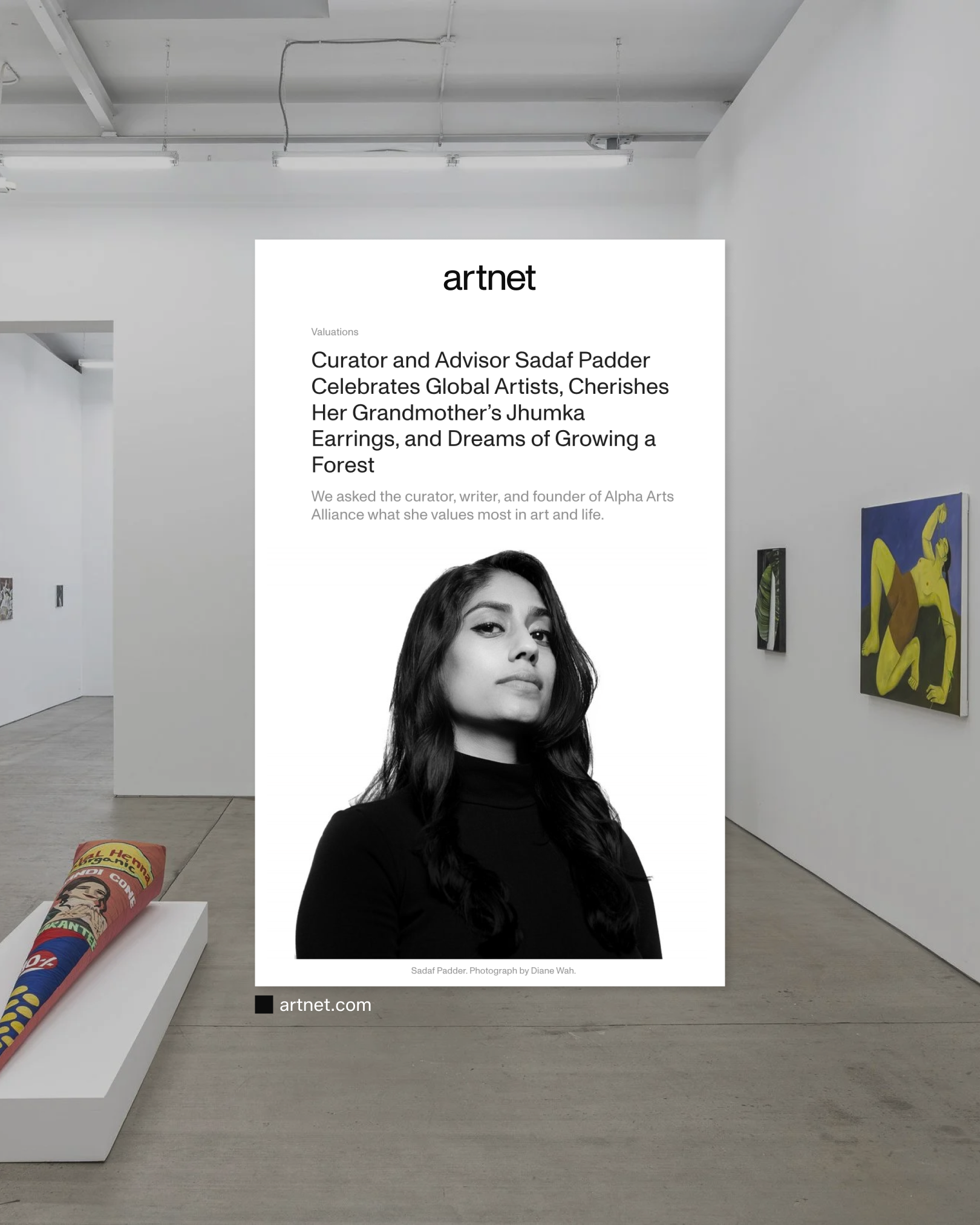
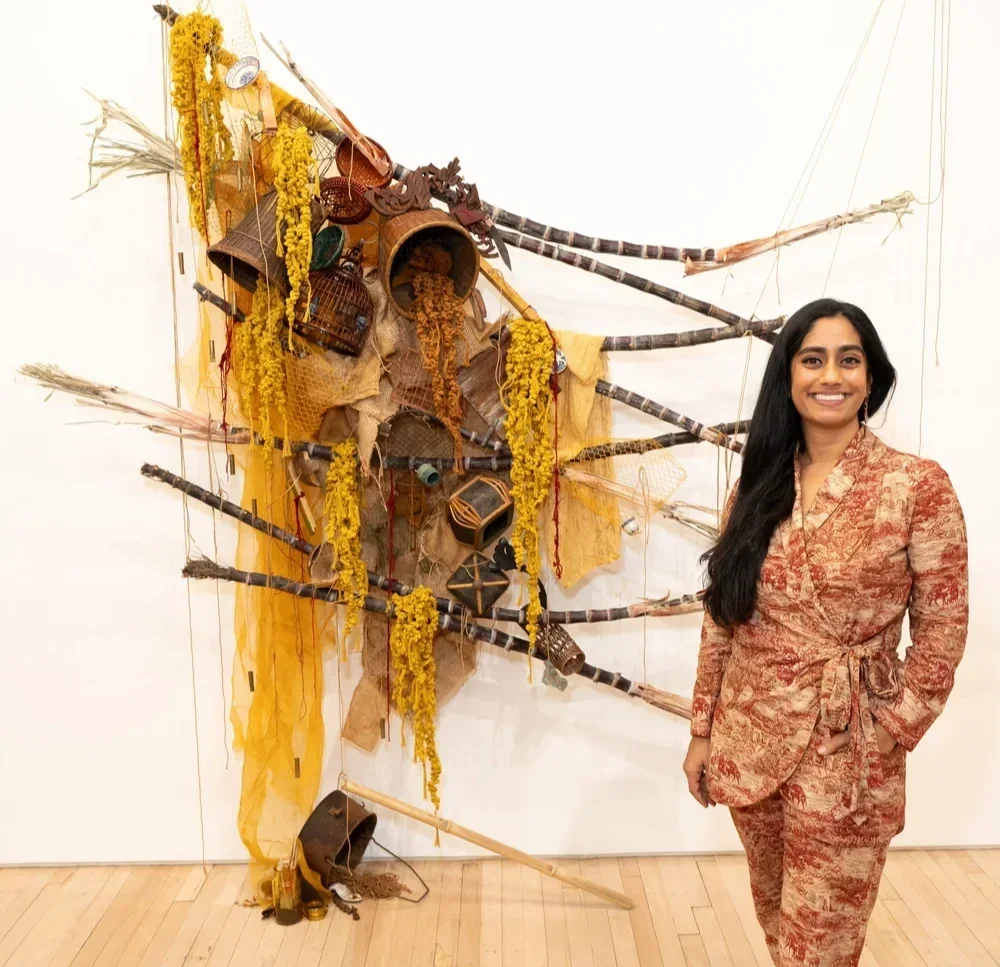
Sadaf Padder is a Brooklyn-based curator, writer, educator, and art advisor whose practice examines how artistic ideas, cultural memories, and visual traditions move across histories and geographies. With a particular focus on South Asian and Islamic cultural worlds, her exhibitions and writing consider how contemporary artists reinterpret inherited forms, narratives, and systems of knowledge to imagine new relationships to identity, place, and the future.

Padder approaches curating as a process of tracing connections between artists, communities, and histories that may appear geographically distant but remain linked through shared experiences of migration, displacement, ecological change, spiritual inquiry, and cultural memory. Her projects often bring historical and contemporary materials into dialogue, treating tradition not as a fixed inheritance but as a living and continually evolving field of knowledge.

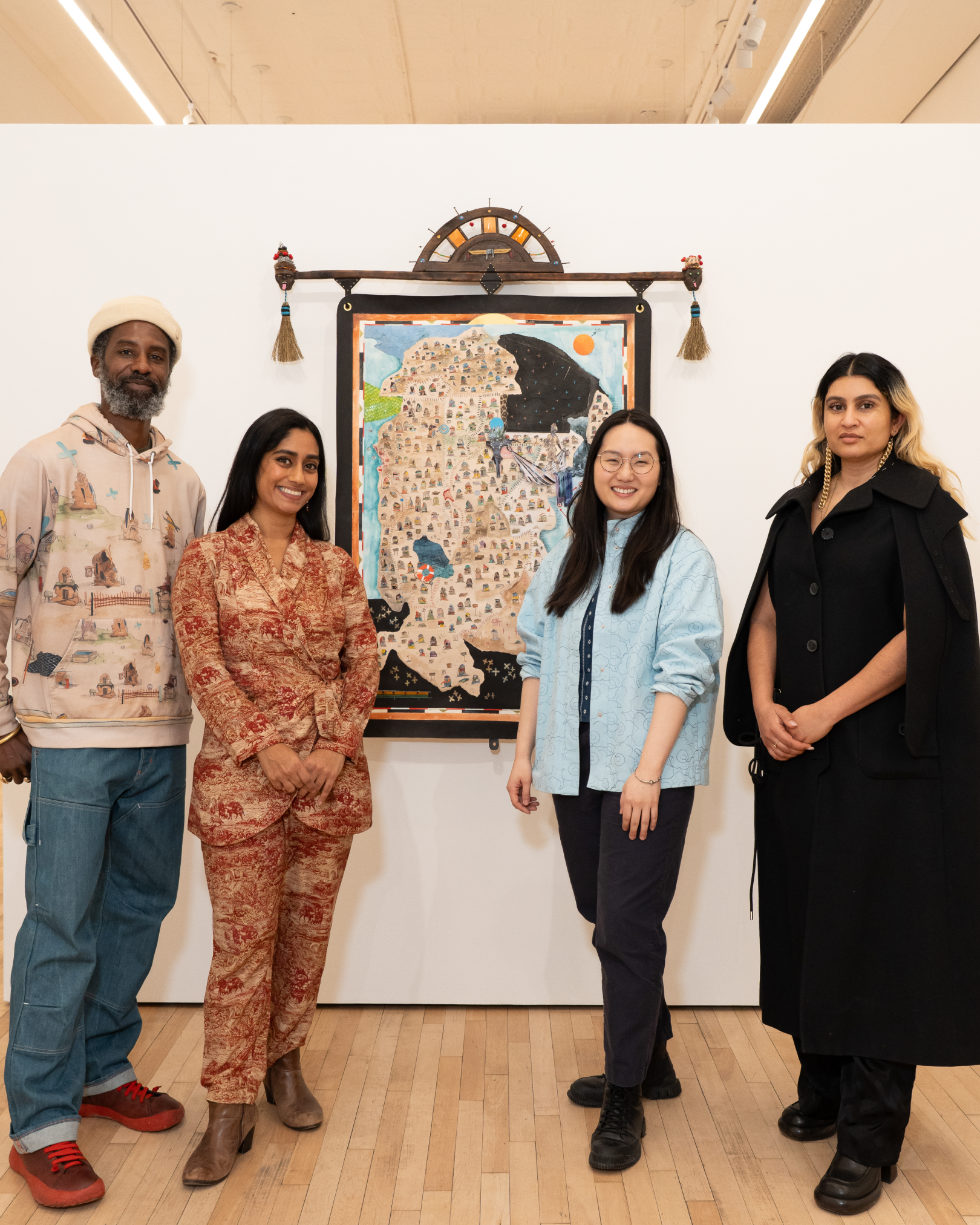
Her recent curatorial projects include BOUNTY at Sargent’s Daughters, an exhibition exploring ecology, stewardship, abundance, and regeneration through the lens of reforestation initiatives in Haiti. Bringing together artists whose practices engage land, labor, and environmental responsibility, the exhibition considered restoration not simply as a return to a previous state but as an active and collective process of imagining more sustainable futures. Padder also curated MAD HEART, BE BRAVE at Fridman Gallery, an exhibition inspired by the poetry of Kashmiri American poet Agha Shahid Ali. Centered on themes of memory, longing, displacement, and homeland, the project examined how artists navigate the emotional and political complexities of belonging. Through works shaped by personal histories, inherited narratives, and experiences of migration, the exhibition considered the ways a sense of home may be remembered, reconstructed, or carried across distance.

Padder’s curatorial practice is guided by a search for connective tissue: the subtle and often unseen threads that bind artists, histories, and communities across geographic and temporal distance. With particular attentiveness to South Asian and Islamic cultural worlds, she explores how visual, spiritual, literary, and narrative traditions continue to circulate within contemporary artistic practice.

Rather than presenting these traditions as static inheritances, Padder approaches them as living epistemologies: evolving systems of knowledge that are continually interpreted, contested, and renewed. Within her exhibitions, historical forms may reappear through contemporary materials, gestures, and technologies, allowing the past to operate not as a closed record but as an active presence through which alternative futures can be imagined. Belonging, in Padder’s work, is never singular or fixed. It is assembled through stories, objects, languages, images, and fragments of cultural memory that travel across generations and geographies. Her exhibitions frequently consider how people maintain relationships to places from which they have been separated, and how identity is reshaped through migration, translation, adaptation, and return.

Padder understands fragmentation not simply as rupture or loss, but as a curatorial and intellectual method. A fragment can carry evidence of a larger history while remaining open to reinterpretation. By bringing partial narratives, archival traces, inherited symbols, and contemporary experiences into proximity, she creates exhibitions in which meaning develops through relation rather than completion.

Her projects unfold as intricate constellations in which diaspora, ecology, mythology, and cultural memory intersect with South Asian and Islamic aesthetic lineages. Artists are brought together through shared questions rather than fixed categories, allowing resonances to emerge between practices shaped by distinct locations and experiences. Through this structure, Padder resists monolithic understandings of cultural identity and instead foregrounds multiplicity, contradiction, and exchange.

Literature and poetry frequently serve as conceptual foundations within her curatorial process. In MAD HEART, BE BRAVE, the writing of Agha Shahid Ali provided a framework for considering longing, exile, and the unstable meanings of homeland. Rather than illustrating the poetry directly, the exhibition extended its emotional and political concerns through visual art, creating a space in which language, image, and memory could reverberate across one another.

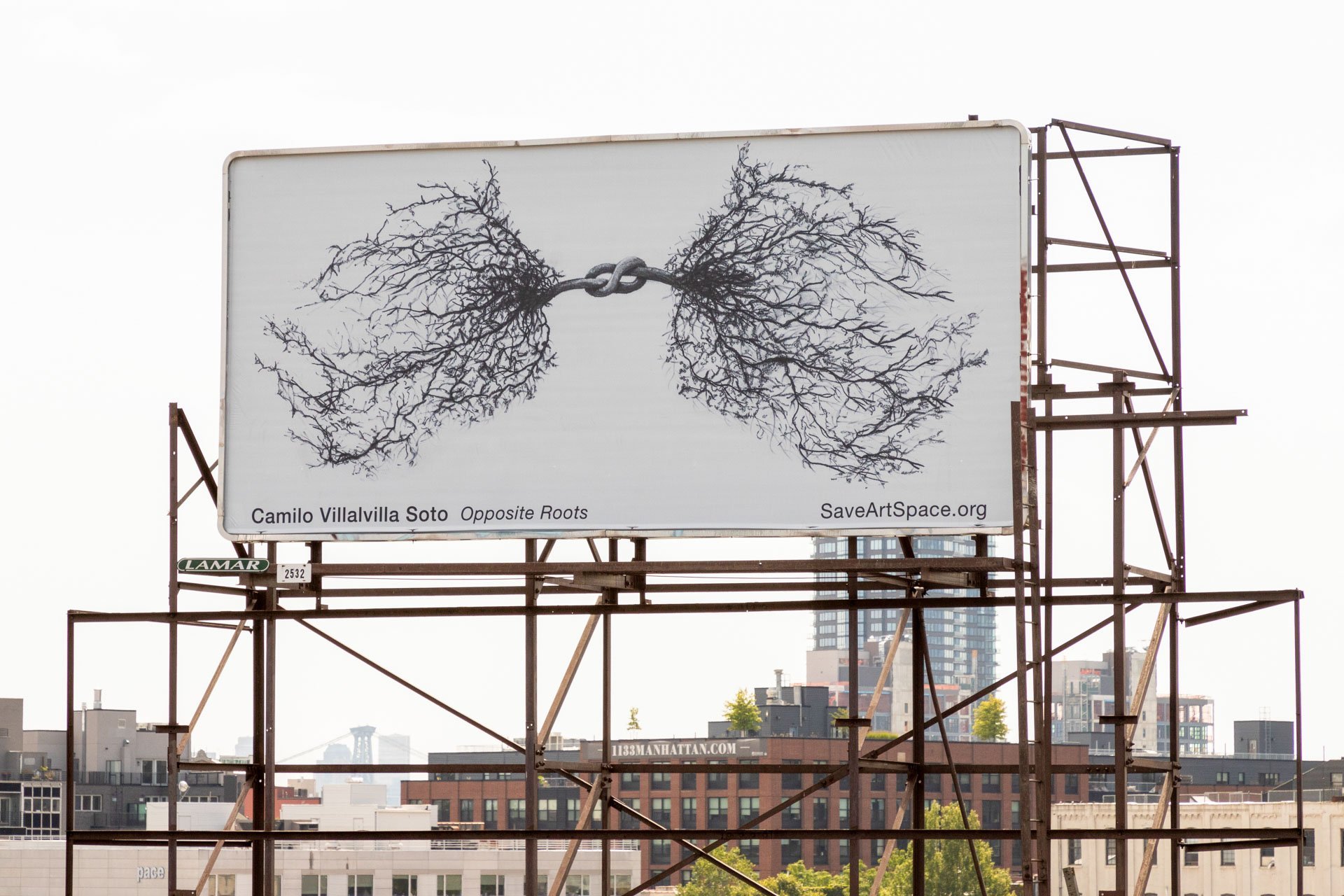
Ecology forms another important strand of Padder’s research. Through exhibitions such as BOUNTY, she examines land not as a neutral setting but as a site shaped by histories of colonial extraction, labor, environmental degradation, and collective stewardship. Her projects consider how ecological repair may also require cultural and historical reckoning, linking environmental regeneration to questions of justice, reciprocity, and community agency. This intersection of diaspora and ecology allows Padder to explore how displacement affects both people and landscapes. Migration, cultivation, extraction, and restoration become interconnected processes through which territories and identities are continuously altered. Her exhibitions invite audiences to consider how relationships to land are formed through memory, labor, spirituality, and inherited responsibility.

Padder’s methodology is deeply research-led and collaborative. Her projects develop through sustained conversations with artists, engagement with archives and literature, and close attention to the political and cultural contexts surrounding each work. Curating becomes an act of listening and translation, one that does not seek to resolve difference but creates conditions for distinct histories and perspectives to remain in productive dialogue.

Writing is integral to this process. Through essays, criticism, interviews, and exhibition texts, Padder expands the conceptual worlds surrounding artists’ practices while situating them within broader cultural and historical conversations. Her writing often brings underexamined artistic lineages into view, particularly those connected to South Asian diasporas and speculative approaches to futurity.

Her research into South Asian Futurisms examines how artists use speculation to challenge linear accounts of progress and imagine futures rooted in cultural memory, Indigenous and ancestral knowledge, spiritual traditions, and ecological interdependence. In this framework, futurity is not defined solely by technological advancement. It becomes a means of reclaiming histories, envisioning alternative social structures, and restoring forms of knowledge marginalized by colonial and institutional narratives.

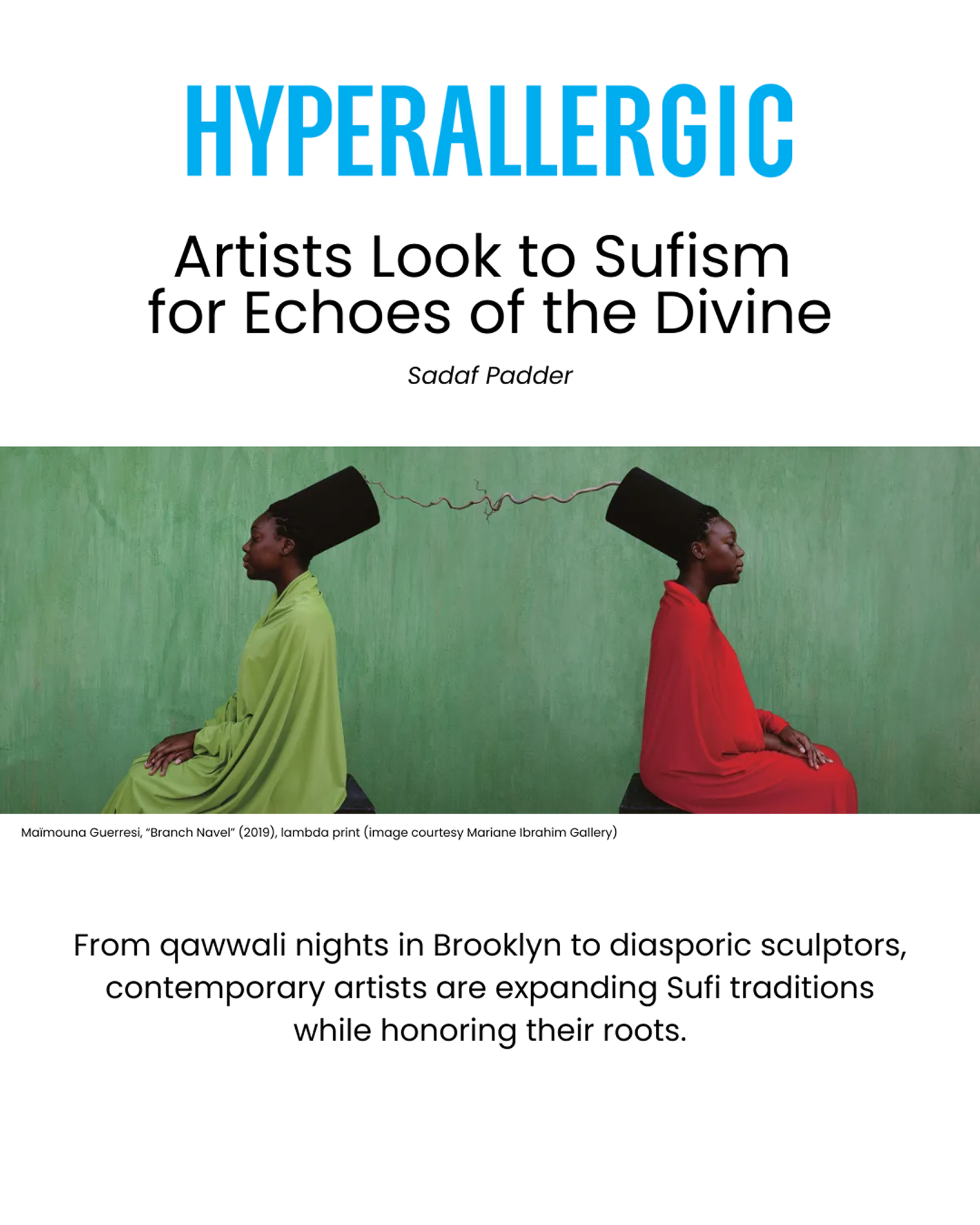
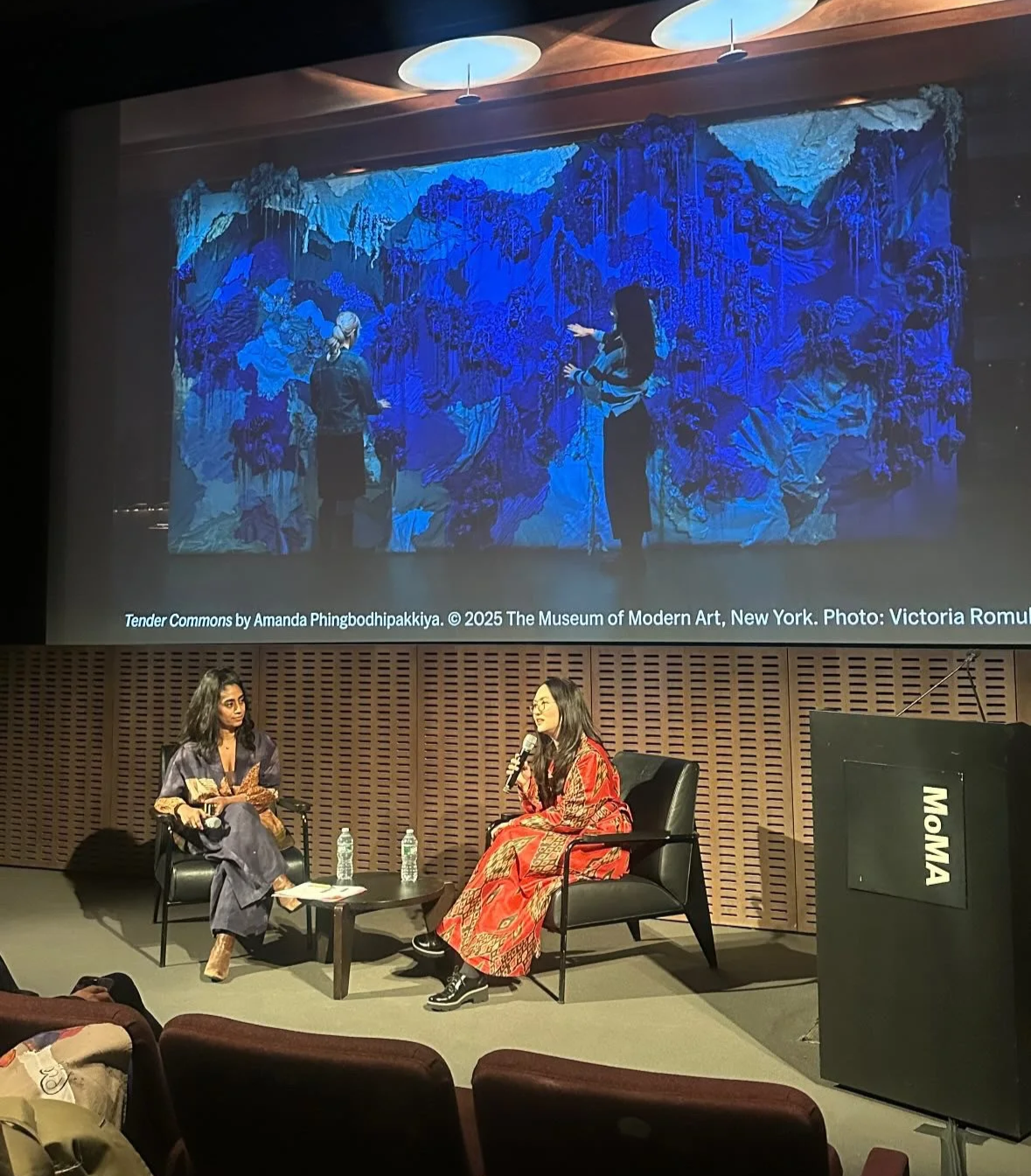
Padder’s writing has appeared in Artsy, Hyperallergic, ARTnews, Cultured, Visual AIDS, UP Magazine, and The Margins. As a 2022–23 Hyperallergic Arts Writing Fellow, she developed a critical framework for examining South Asian Futurisms and the ways artists use speculative practices to rethink history, technology, ecology, and collective possibility. Her writing extends the research at the center of her exhibitions, creating space for artists and cultural narratives that have often remained underrepresented within dominant art-historical discourse. She has lectured and served as a guest critic at institutions including the Rhode Island School of Design, Pratt Institute, Rutgers University, Columbia University, and the University of Hawaiʻi. Through her work as an educator, Padder encourages emerging artists and curators to understand research, writing, and exhibition-making as interconnected forms of inquiry. Padder serves on the boards of the Vera List Center for Art and Politics, Twelve Gates Arts, and Grown in Haiti. She is also a Create Change Fellow through The Laundromat Project and an upcoming Critic-in-Residence at Art Omi. Across these roles, she contributes to organizations advancing artistic experimentation, cultural exchange, political engagement, and more equitable models of institutional support.

Across her work as a curator, writer, educator, and advisor, Padder proposes exhibition-making as a relational practice. An exhibition is not only a site of presentation but a space in which histories can be reconfigured, cultural memories activated, and new affinities formed. Through careful research and associative storytelling, she creates encounters that allow audiences to move between intimate experience and broader historical systems.

Our Foundation fellowship will support Padder’s curatorial research and the development of a new exhibition. By providing resources for sustained inquiry, artist engagement, and project development, the fellowship will allow her to expand the cultural and geographic conversations central to her practice and bring a new constellation of artists, histories, and ideas into public view.