Gabriella Marinho & Dawn Chan
An Artist Needs A Secret Too
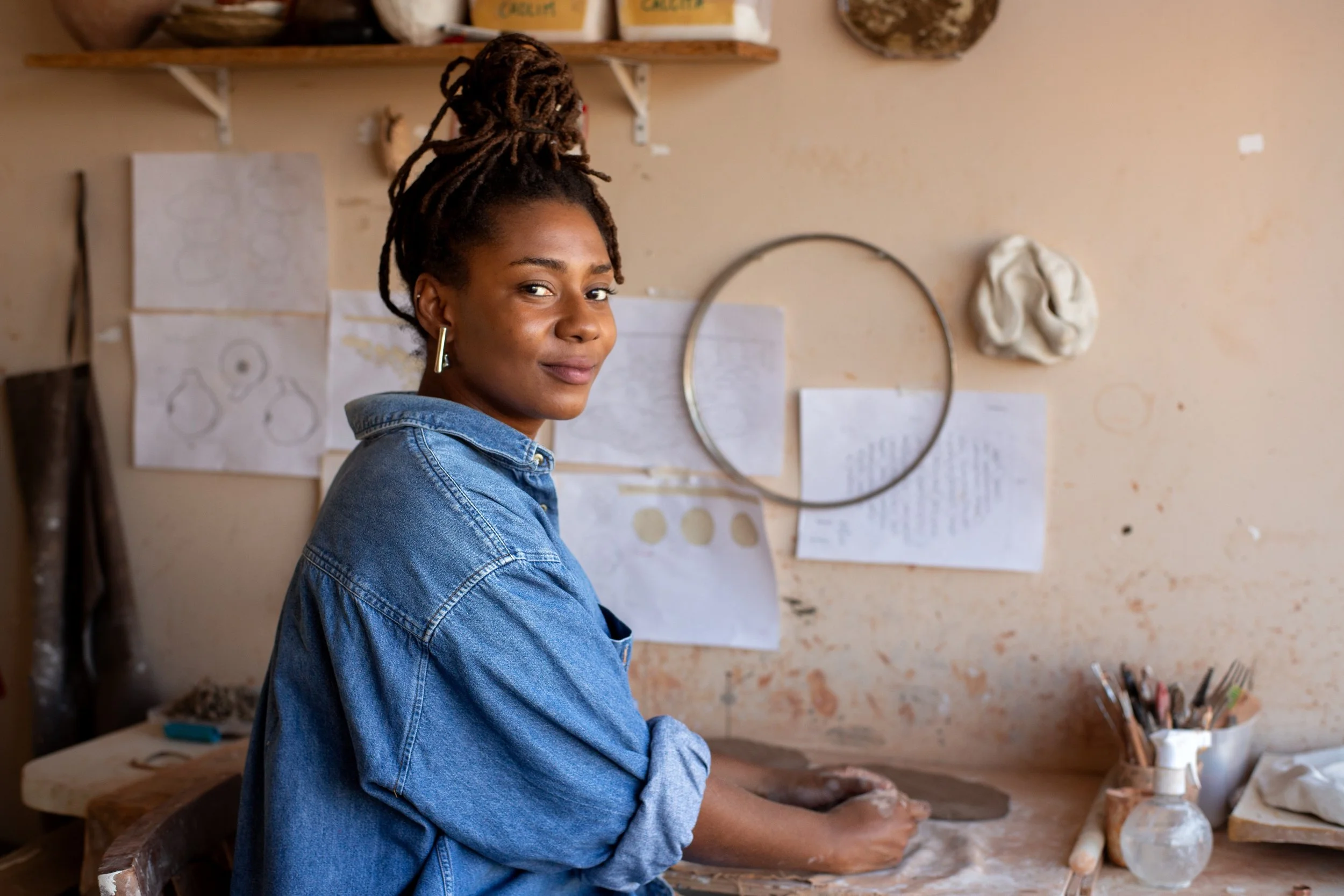
Brazilian artist Gabriella Marinho grew up in Jardim Catarina—a large urban community on the outskirts of Rio de Janeiro, Brazil—and went on to study journalism and communications. Since pivoting to visual art, she has created a diverse body of work that draws her audiences into charged sensorial experiences with her natural materials—clay, terracotta, porcelain, sand—that double as meditations on cultural heritage and personal meaning. One piece, Agô, gathers 300 shells on a wall which, upon careful examination, turn out to be ceramic pieces, each possessing subtle differences that underscored Marinho’s commitment to the handmade. In another installation, rastro luminoso (Luminous Trail), Marinho gathered sculptural objects but also filled the entire floor of the gallery with several tons of white sand, inviting visitors to take off their shoes before entering. Approaching her sculptures to examine them closely was an act that could not be separated from feeling the sensation of sand underfoot.
Here, Marinho speaks more on the importance of material culture, Afro-Brazilian cosmologies, memory, and community education in her work.
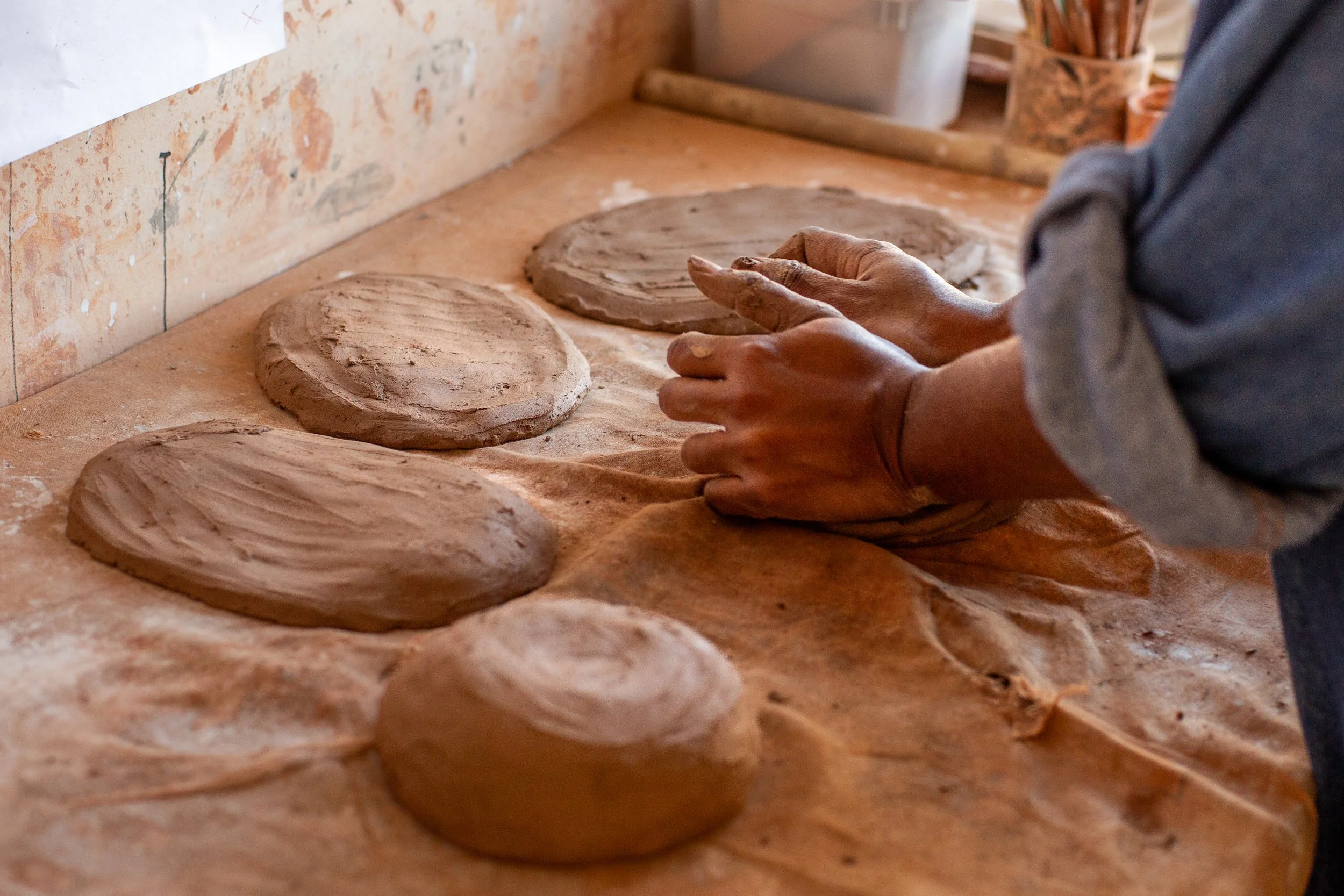
Work in progress Photo credits: Joyce Piñeiro
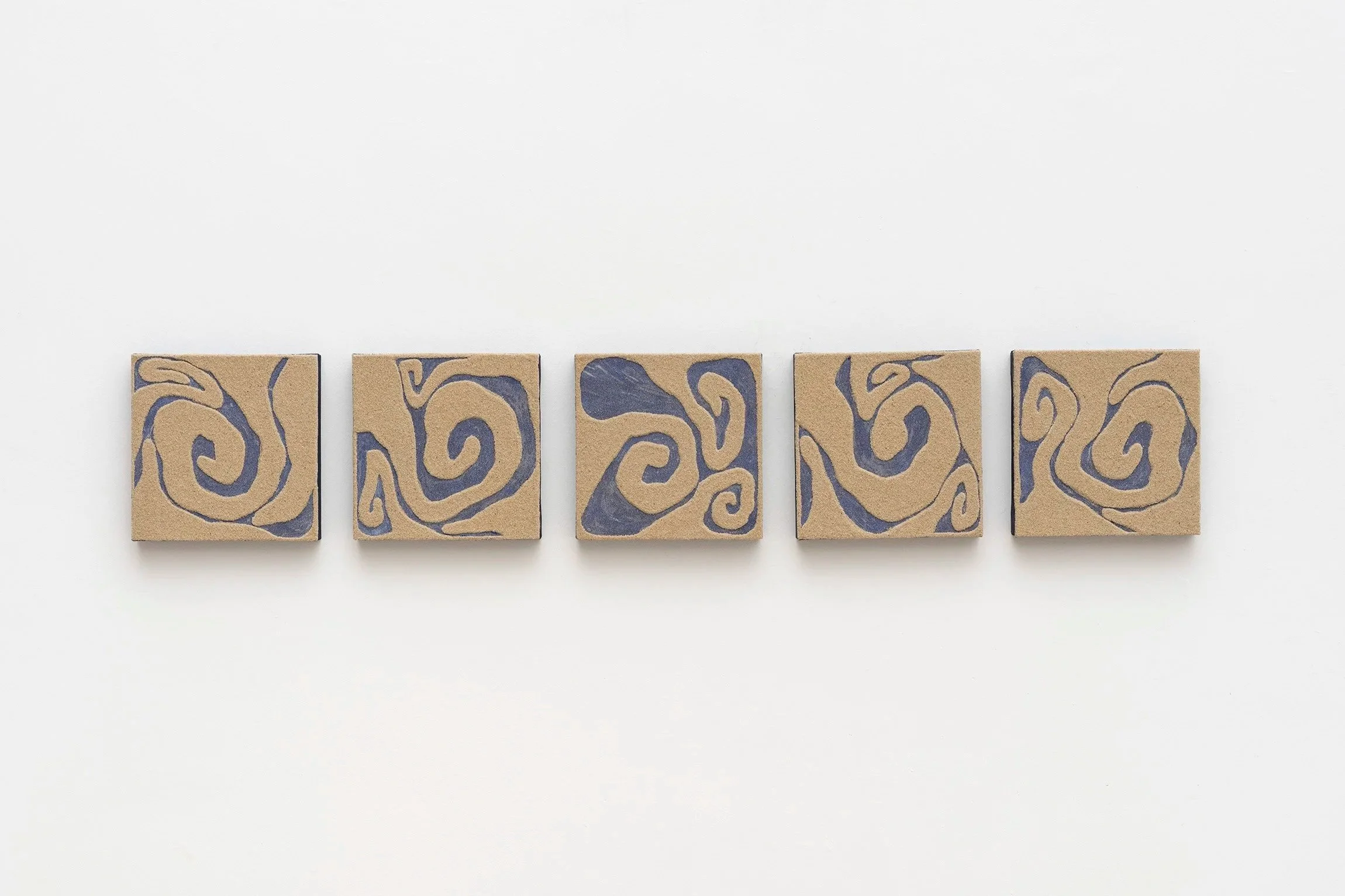
Sem título, da série Rastros [Untitled, from the Trails series], 2026
DC You often write while you’re making artwork. Can you talk about what you write, and why? And how your writing connects to your sculptural work?
GM Usually, I write a little bit of poetry. A phrase, or something about my artwork. I really like to do that. Most of the time, I don't show it to the audience, but keep it to myself. I understand that part of an artistic practice is for the people—the community. But what I write is like a secret that I keep to myself when I create artwork. It's like talking to myself: a fragment about my thoughts.
Maybe in a few years, I will show my writing to others. But I understand that it’s a fragment of the art that I need to keep with me for a while, to grow older with me. Artists need to have some secrets inside too.
DC Why do you think artists need secrets for themselves?
GM We all have something that speaks just to ourselves. And I think that when artists keep secrets, maybe they humanize themselves.
DC Your training was in text, and words, and writing first. You didn’t start out making art. When you were growing up, did you have any idea you would become an artist? Did that seem like a possibility?
GM No. I really don't know why I'm an artist! Because in my neighborhood, paths to making art weren’t shown to us. So I studied journalism, with a specialization in African literature, especially in Angola. That degree in journalism opened my eyes to other forms, other ways to talk about my history.
DC So how did you end up making not just art, but ceramics, for which you need such specialized skills?
GM The art department was near our communications department. Back then, I used to stay inside the ceramic rooms, just to watch and to learn. I spent two semesters like this, just watching. I practiced a lot. I asked the teacher, of course. She was very receptive to me, because it was clear I was not in the right place.
But after that, I did study at two art institutes here in Rio. But it was expensive, and growing up, my family didn’t have money. So I paid for one of those institutes for maybe a year, and after that, left and saved up money, then bought what I needed for my studio. That happened in 2016. I’ve been practicing in my studio in Rio ever since.
DC You have mentioned before that studying journalism connected you to your own heritage and diasporic memories. How?
GM When I studied communications, I specialized in African literature, looking especially at Angola. I have Afro-Brazilian family roots. As Afro-Brazilian people, most of us don’t have the opportunity to learn much about our past—about diaspora and slavery and all of that. But Brazilian Portuguese has a lot of African words. It's very normal to use some Yoruba words in everyday speech. So I might not know where my family came from before slavery, but I carry with me some of the words and some of the colors. I have clay. I have terra cotta and porcelain.
DC Can you give an example of how these Yoruba words permeate your world? Or maybe your artwork?
GM For example, I made an installation of about 300 shells called Agô. Agô is a word from the Yoruba language that means “to ask for permission”, and it’s used to demonstrate respect. Yoruba is one of the threads that I use to remember and try to keep alive the past of my ancestors.
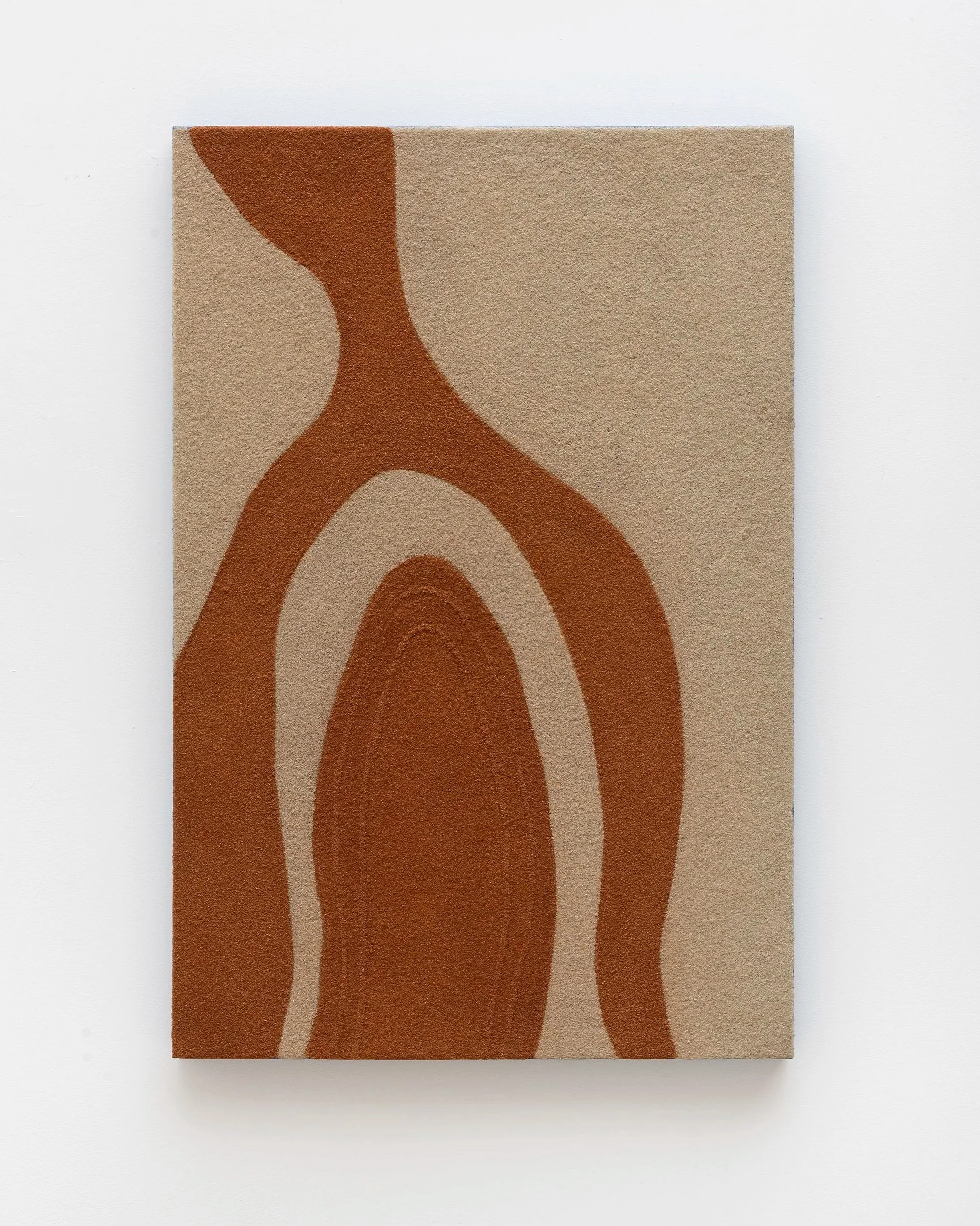
Areia Branca e dendê, da série Rastros [White sand and palm oil, from the Trails series], 2025
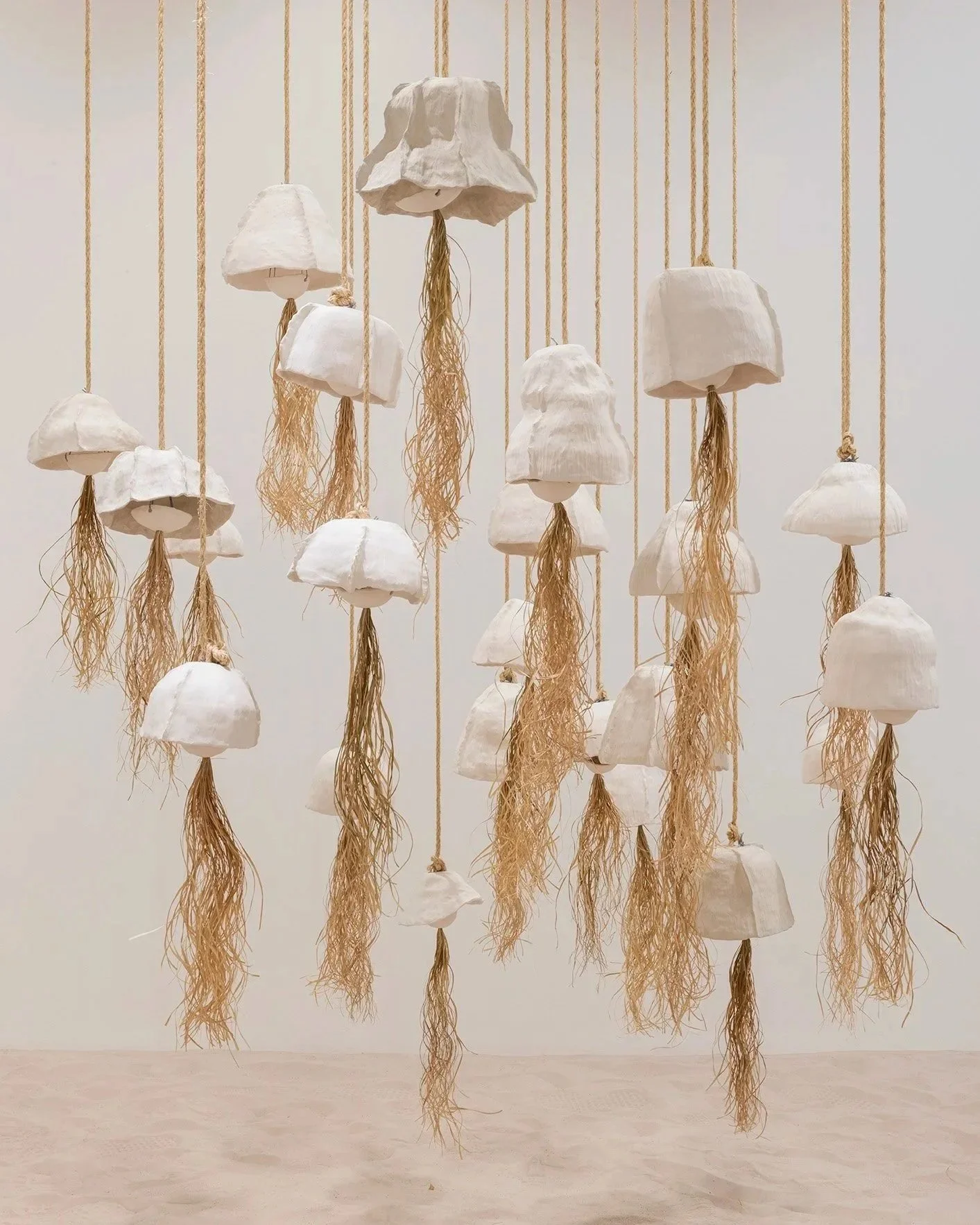
Cascata [Cascade], 2024
DC What about the other threads and symbols you mentioned having? The colors, clay, terra cotta, and porcelain?
GM When I connect with a person or place, I use the soil of that place and the soil of my place, and put them together into clay. An example of this was in Taiwan. I did a work over there and used the sand of Green Island, in Taiwan, in my sculptures. Taiwan is far, but it becomes near because clay brings us together.
One of the Angolan books that I read during my studies is called Luuanda, by José Luandino, that talks about the city Luanda, which is the capital of Angola. Luandino writes about the red, the ground. The soil of his ground is red. I grew up in a neighborhood where the ground was red too.
That was one of the symbols I found that drew a connection between Africa and Brazil. So in my artwork, I use red terracotta. It’s like, I don’t know: a song of color.
Or another example is porcelain. It’s a traditional material that we see in Asia: Japan or China. In Brazil, we don't have such a strong culture of using porcelain as we do with terracotta. In the Afro-Brazilian tradition surrounding the orishas, we have an orisha called Oxalá. All his clothes and objects are white. I think that he's the only orisha in our mythology whose offerings are served on porcelain dishes. Porcelain and Air are two symbols of Oxalá, who is an orisha of peace. When I want to talk about peace, spirituality, or the natural elements from Afro-Brazilian mythology, I use white or porcelain. These are all symbols that I can use to build memories and keep them alive for those who will come after me.
DC You’ve spoken before about bringing these kinds of material and cultural histories to schools. Can you talk about the role that educating others plays in your practice?
GM I teach classes in schools and donate materials to schools. (I donated the sand from my installation rastro luminoso (Luminous Trail) to a school for them to build a place meant to play football, soccer and volleyball.) I also bring sculptures to schools and show them to kids there. I’m interested in helping these kids learn more about clay, more about ceramics, because we have strong cultural knowledge on how to construct sculptural ceramics and vases and so forth. But this knowledge doesn’t make it inside schools. Especially because Brazil is very segregated. There are huge inequalities between communities. So it's important to show kids how to understand history, and how to create.
DC Absolutely.
GM I also want to write about the importance of art education for contemporary art. We talk a lot on the importance of contemporary art in art education, but I think it’s the other way around. Art education is so important for constructing different languages and concepts in contemporary art.
DC We do often imagine superstar artists rising to such a level of success that they are somehow freed of needing to teach — there are fictions of that sort that get told, and repeated, about artists and their career trajectories. What you’re suggesting is such a compelling re-frame: that being involved in education might actually make your own art better, or more interesting. Can you say more about how teaching helps construct different languages and concepts for you, and your own artwork?
GM In my lessons, I try to introduce a different way to remember memories, because, in our times, we need to think fast. We are pressed to forget the past and keep looking at the future. So when I visit schools, I try to have everyone think more about their own past. What memories do these smells bring back? What was the color of the ground underneath the tree that you used to play around when you were six years old?
And we do it together. This is very important to exercise our sensibility as artists. We need to keep thinking, “How can I notice special things that most people just pass by everyday?” We need to stay with this simplicity. When I have these conversations with others, there’s always one person who cries. I cry! Or other people cry. Here in Brazil — and in the whole world — we are always running. When we think about our memories, when we make a sculpture, when we use clay, we stay in the present.
DC For you, what is one of those memories? A smell or color from childhood?
GM I don't know if I’ll have the right words, but I’ll try. When I was young, I used to play soccer barefoot in unpaved streets with neighbors. Then, I would go back into my home with my feet covered in dirt.
For me, it’s a really great memory: forgetting the time and staying out all day playing. Then, coming back, cleaning off my feet and going to eat dinner. That smell of fresh water together with the smell of soil from the streets it’s very endearing to me.