Whitney Allison Oldenberg
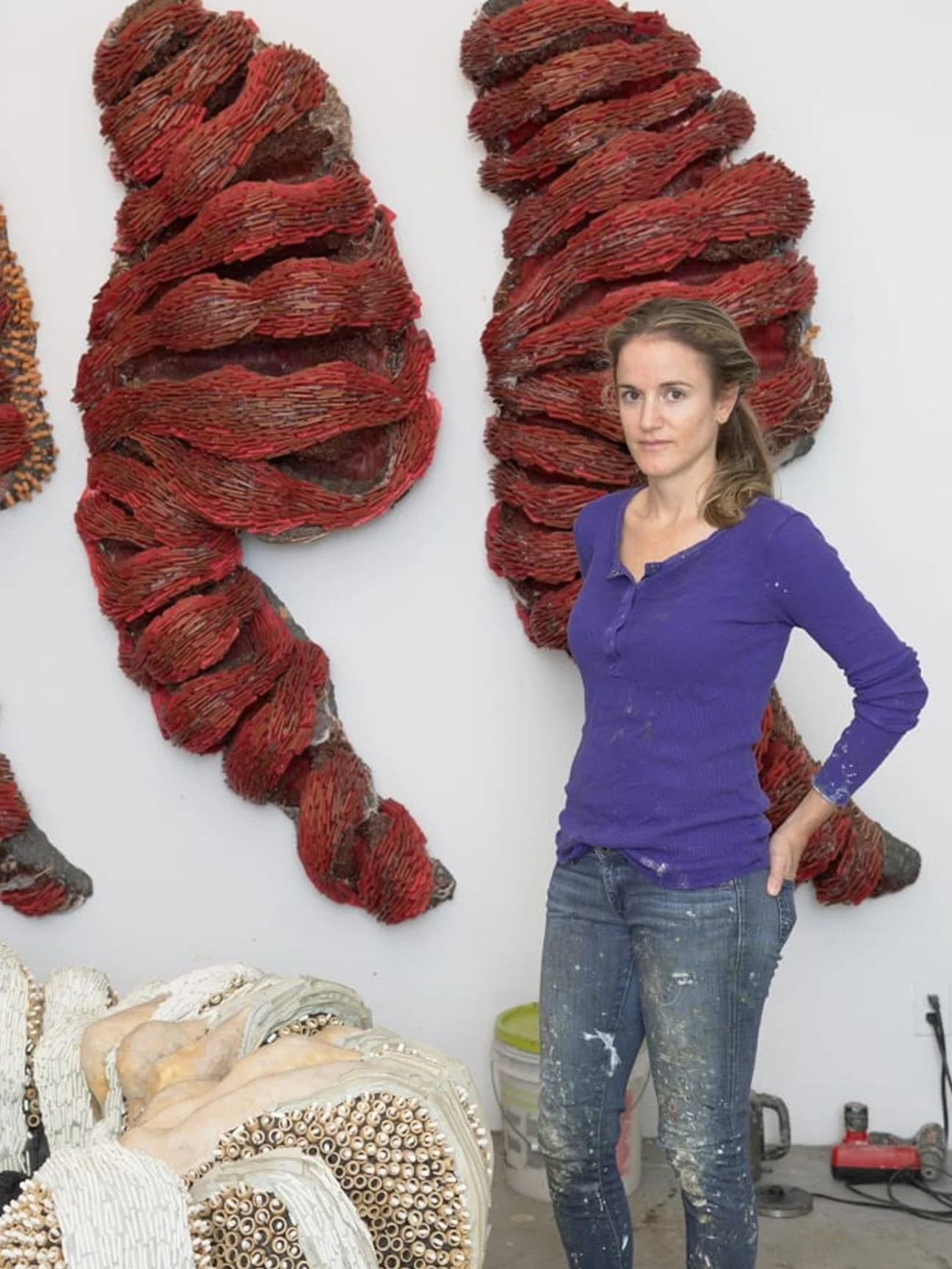
Whitney Allison Oldenburg (b. Jacksonville, Florida) is a New York–based sculptor whose work investigates the uneasy intimacy between people and the objects that define their material world. Through sculpture and assemblage, she reimagines everyday materials such as rock, clay, domestic goods, string, and personal belongings as sites of both attachment and alienation. Her works trace how desire, accumulation, and waste shape the emotional and economic systems that bind human life to the built environment.
Oldenburg received her BFA from Cornell University and her MFA from the Rhode Island School of Design. Her honors include the Charles Baskerville Scholarship, the Virginia Commonwealth University Fountainhead Fellowship, the Toby Devan Lewis Award, and the Maharam STEAM Fellowship. She was nominated for the Joan Mitchell Award in 2024.
Her work has been exhibited in New York, Chicago, Richmond, Miami, Houston, and Ottawa, and featured in publications including Hyperallergic, The Wall Street Journal, and New American Paintings. Oldenburg has participated in residencies at the Skowhegan School of Painting and Sculpture, the Atlantic Center for the Arts (with Michelle Grabner), and Materials for the Arts, and the Elizabeth Foundation for the Arts Studio Program.
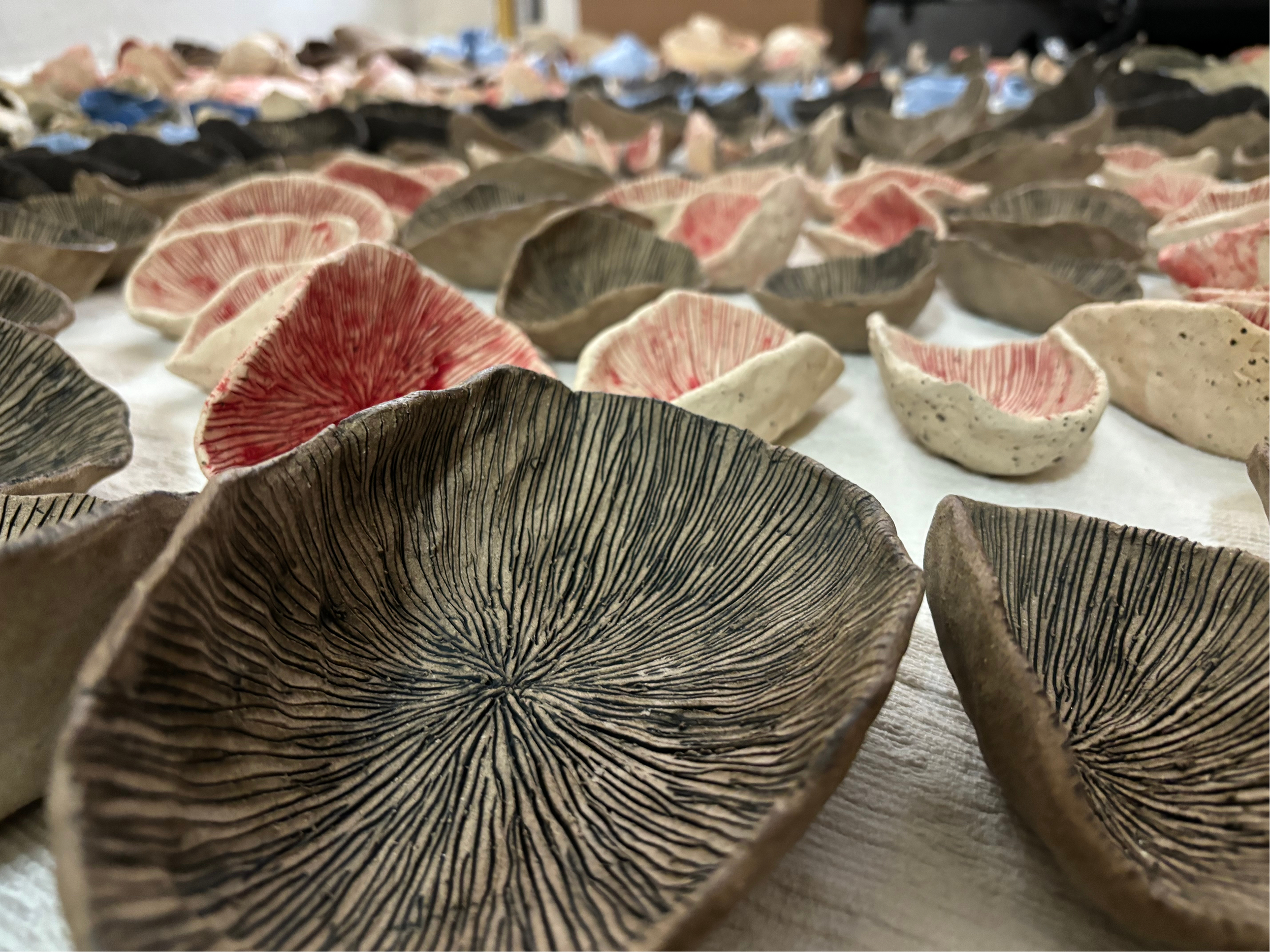
Oldenburg’s practice examines how material culture reflects and distorts human vulnerability. Her sculptures begin with fragments of the built world—stones, clay, string, and discarded domestic goods—objects that already bear traces of use and history. Through acts of collecting, layering, and reconstruction, she transforms these remnants into charged forms that oscillate between protection and exposure, survival and excess.
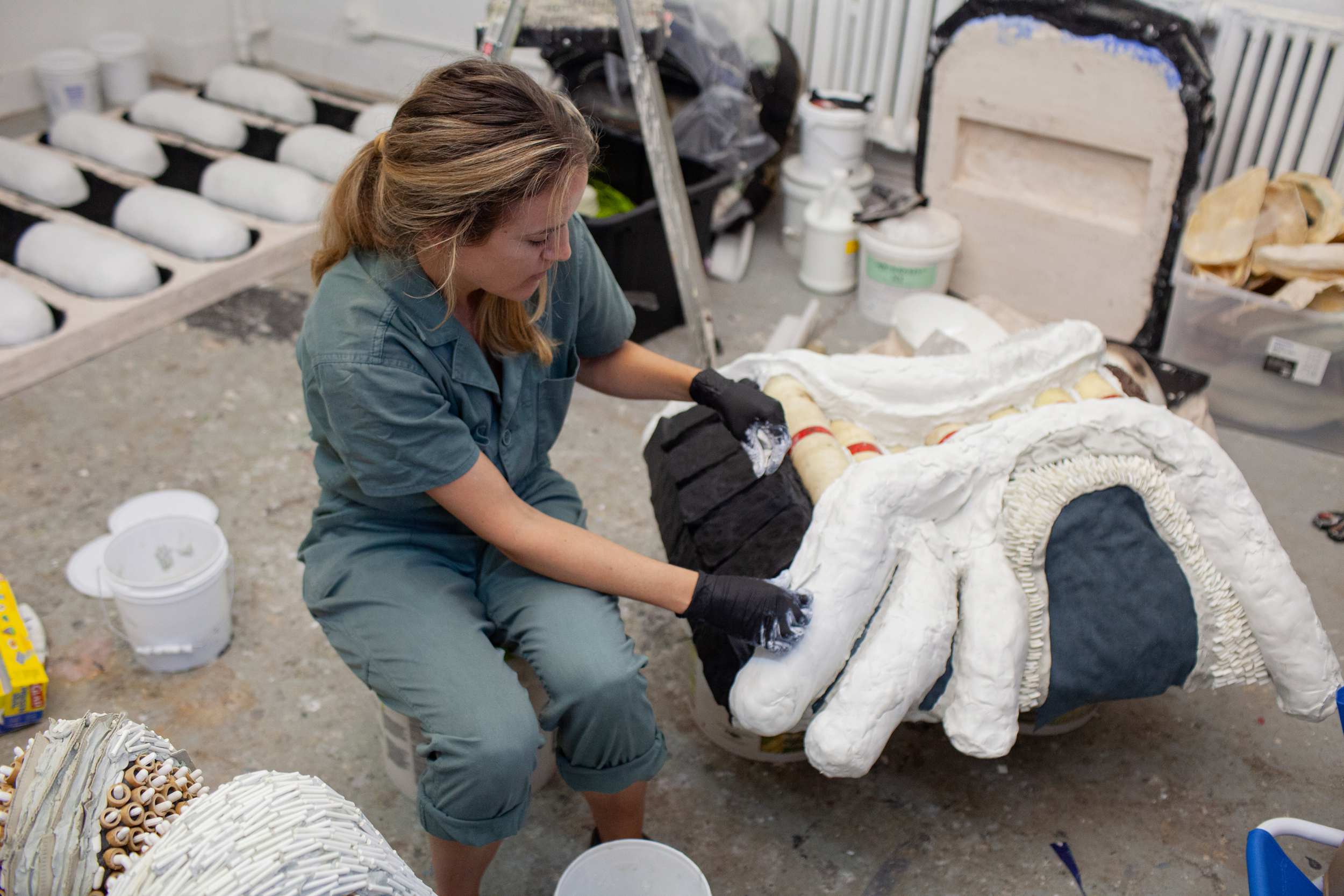
She approaches materials as extensions of lived experience. Each work is both an accumulation and a rupture, holding within it the contradictions of intimacy, consumption, and decay. Her process is deeply physical and repetitive, involving molding, binding, puncturing, and rebuilding. This labor becomes a meditation on the limits of control and the body’s role in systems of production and desire.
Central to her practice is an exploration of value, excess, and waste. Drawing on the writings of Georges Bataille, Oldenburg treats the surplus of contemporary life as both symptom and metaphor. The act of accumulation—whether of possessions, labor, or emotion—becomes an erotics of survival in a culture where human worth is mediated by things. Her sculptures expose the instability of this system, revealing how objects absorb social and economic trauma even as they promise comfort or permanence. Many of her works contain imprints or remnants of previous pieces, creating a lineage of forms that reproduce and decompose over time. This cyclical approach suggests that objects, like bodies, carry generational memory. Through this process of reuse and recursion, Oldenburg questions what it means to live within a culture that measures identity through accumulation.
Ultimately, her work stages a confrontation between the intimate and the systemic. The sculptures’ hybrid, bodily forms resist clear categorization, embodying a protest against the reduction of life to material value. By transforming fragments of the everyday into complex, sensual, and uneasy objects, Oldenburg renders visible the fragile entanglement of matter, emotion, and survival.
-
![]()
High Tide (2023)
60 x 51 x 28 in.
Molds of Feeding Frenzy, metal, clay, lollipop sticks, tiki wall, generic acetaminophen, leather, linen, resin
Image courtesy of the artist
-
![]()
Ticket to Paradise (2023)
CHART Gallery, New York
Image courtesy of the artist
-
![]()
Fade (2023)
34 x 27 x 14 in.
Remote controls, clay, cloth, paper, slide projector, resin
Image courtesy of the artist
-
![]()
Apex Predator, 2023
35 x 33 x 15 in.
Wood, clay, resin, juggling pins, cell phone cases, suede, necklaces, rock, resin
Image courtesy of the artist
-
![]()
Hope and Dreams (2023)
73 x 48.5 x 7 in.
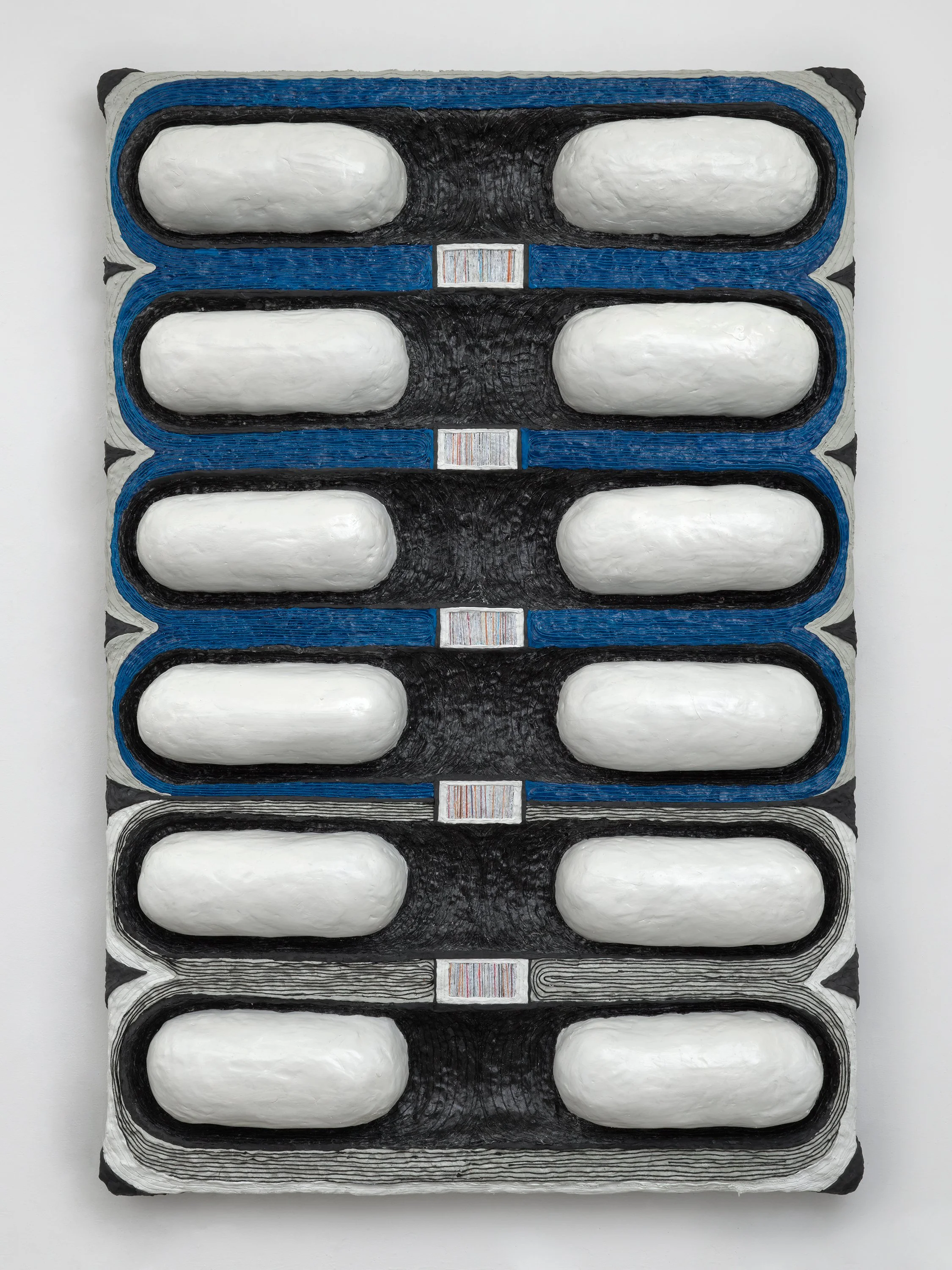
Molds of air filters, clay, steel, string, resin, credit cards
Image courtesy of the artist, Photo: Elisabeth Bernstein