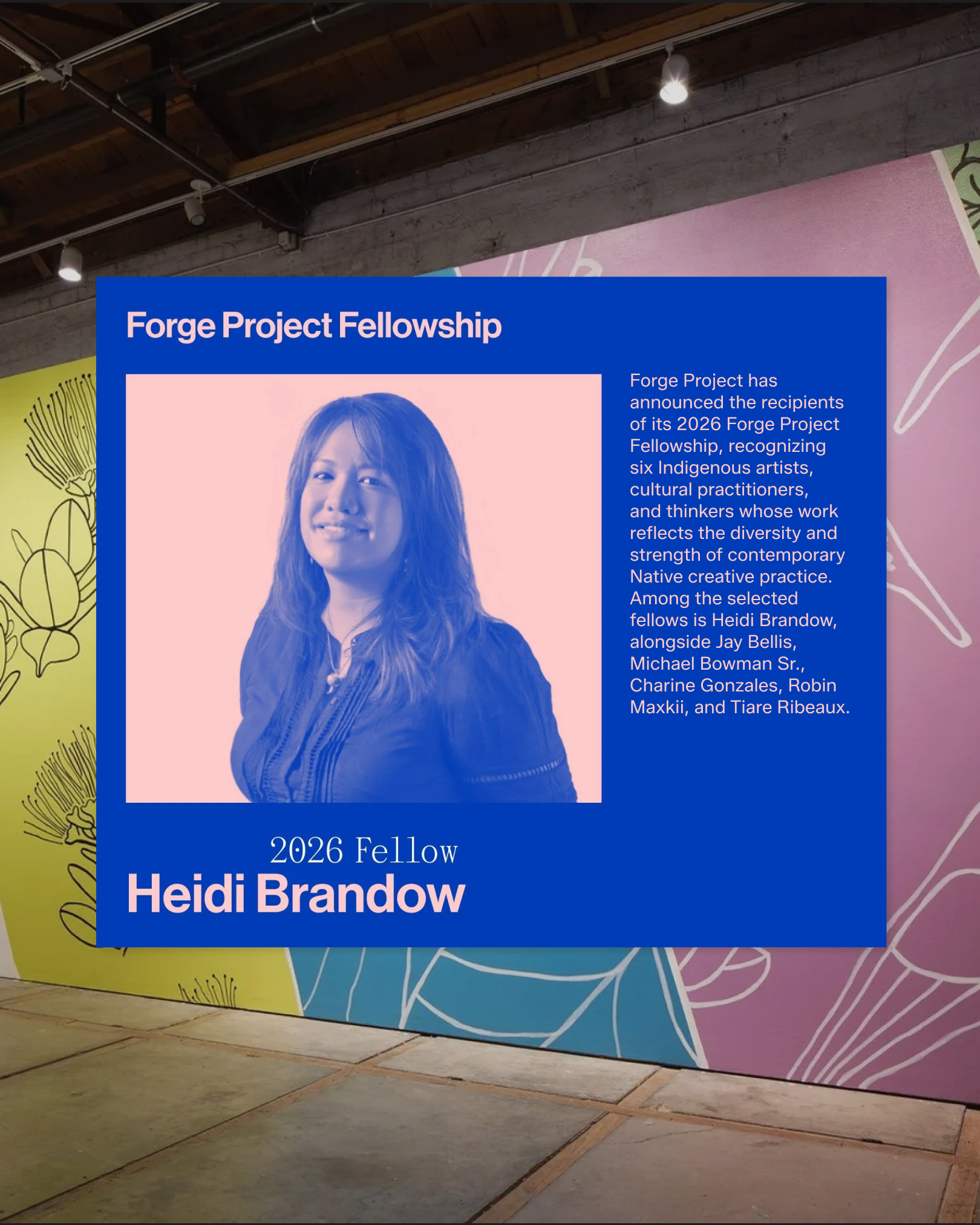
Heidi Brandow
Heidi K. Brandow (Diné and Kānaka Maoli) is an artist, curator, writer, and educator based in Santa Fe, New Mexico. Her interdisciplinary practice is grounded in Indigenous knowledge systems, land-based epistemologies, and relational forms of exchange. Across exhibitions, research, writing, design, and artistic production, she examines how cultural memory, place, and community shape contemporary Indigenous practices within local, transnational, and intergenerational contexts. At the center of Brandow’s work is a commitment to Indigenous-led methodologies and artist-centered collaboration. She approaches curating not simply as the organization and interpretation of objects, but as a process of building relationships and creating conditions for knowledge to be shared responsibly. Reciprocity, accountability, care, and sustained dialogue form the ethical foundations of her practice, guiding how she works with artists, communities, cultural materials, and the lands from which artistic knowledge emerges.
Brandow’s research considers Indigenous cultural exchange across Native North America, the Pacific, and Central Asia. By tracing relationships among communities separated by geography but connected through movement, adaptation, kinship, and shared understandings of land, she challenges frameworks that position Indigenous cultures as isolated or fixed in the past. Her work instead foregrounds Indigenous peoples as participants in expansive networks of intellectual, artistic, and material exchange.
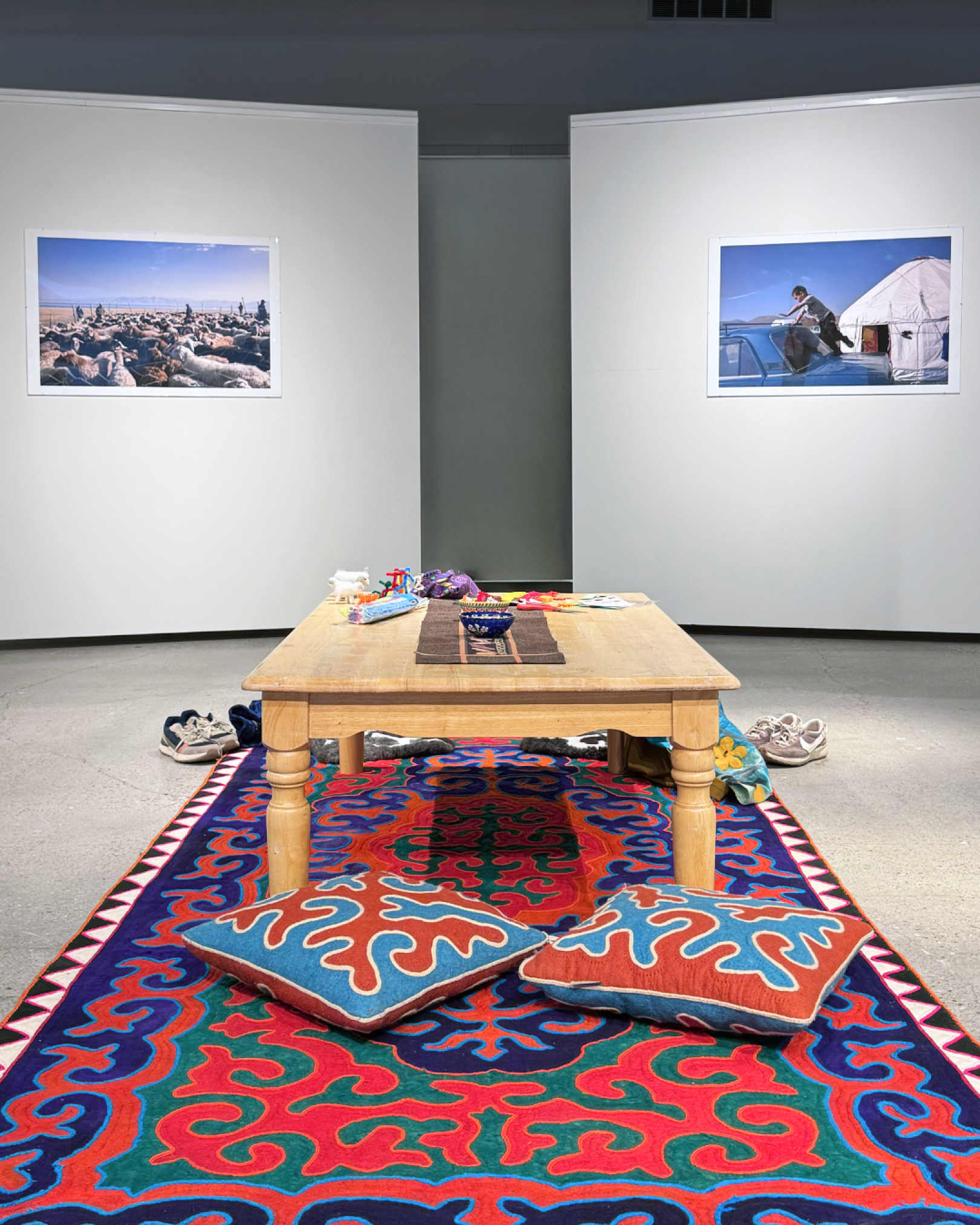
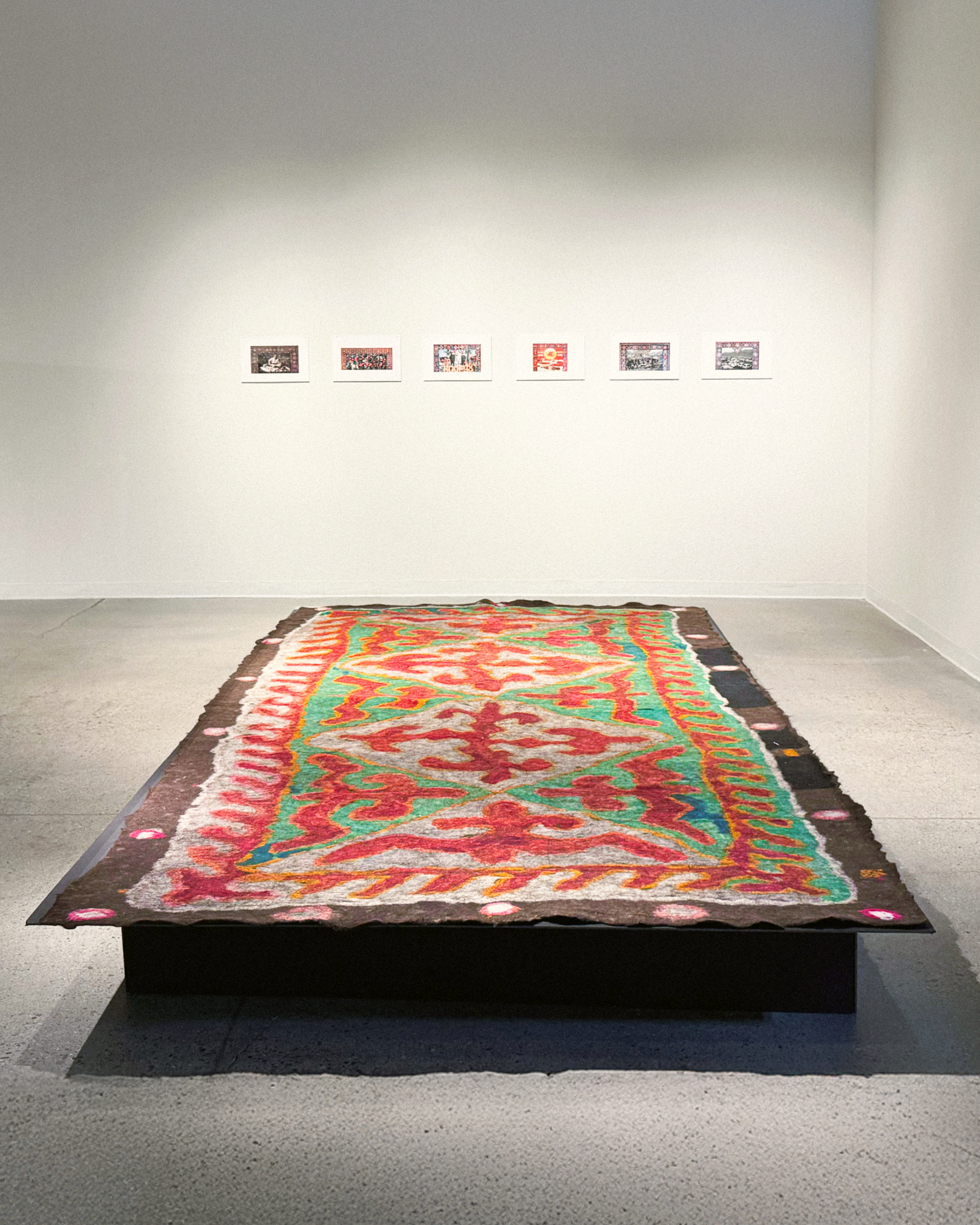
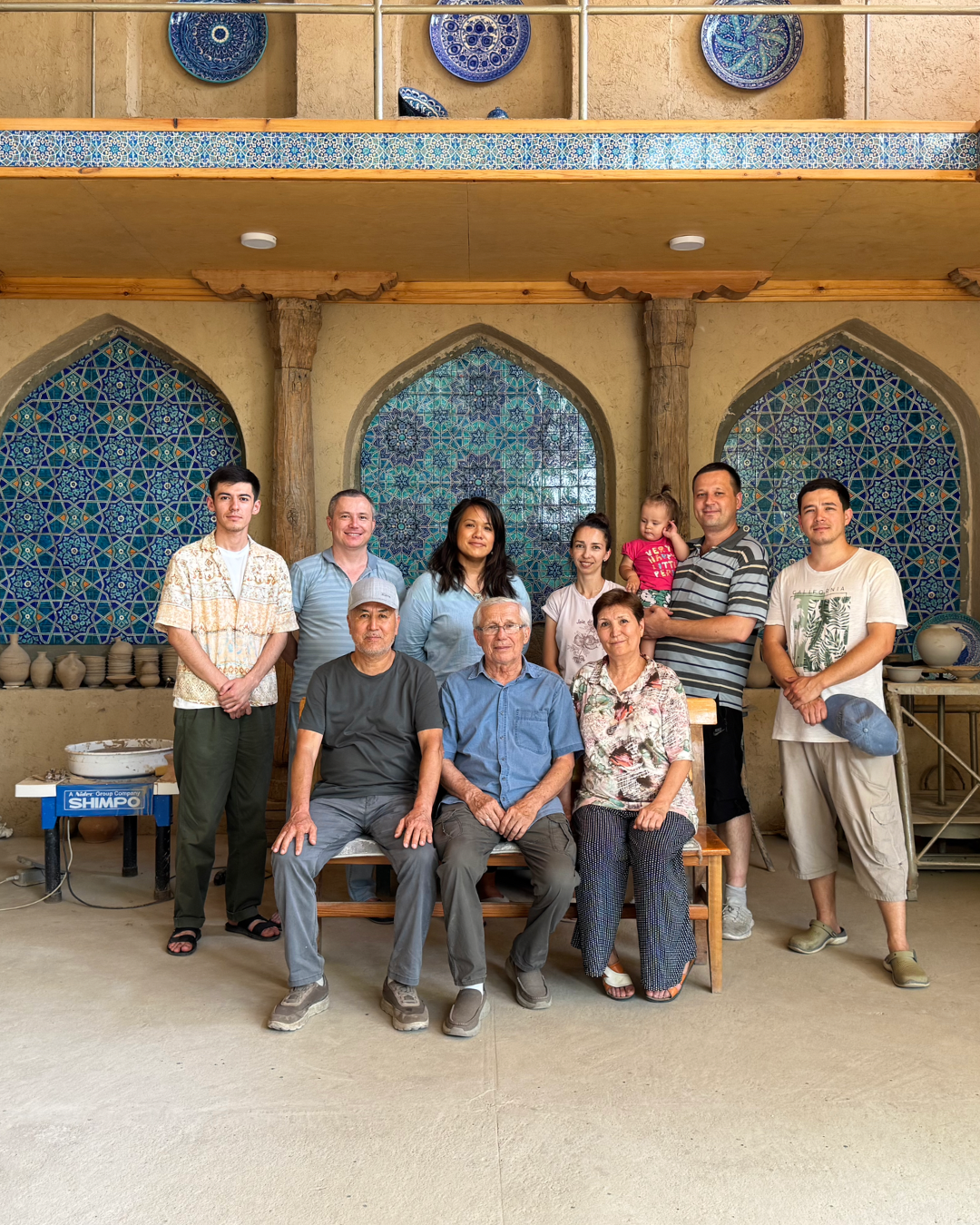
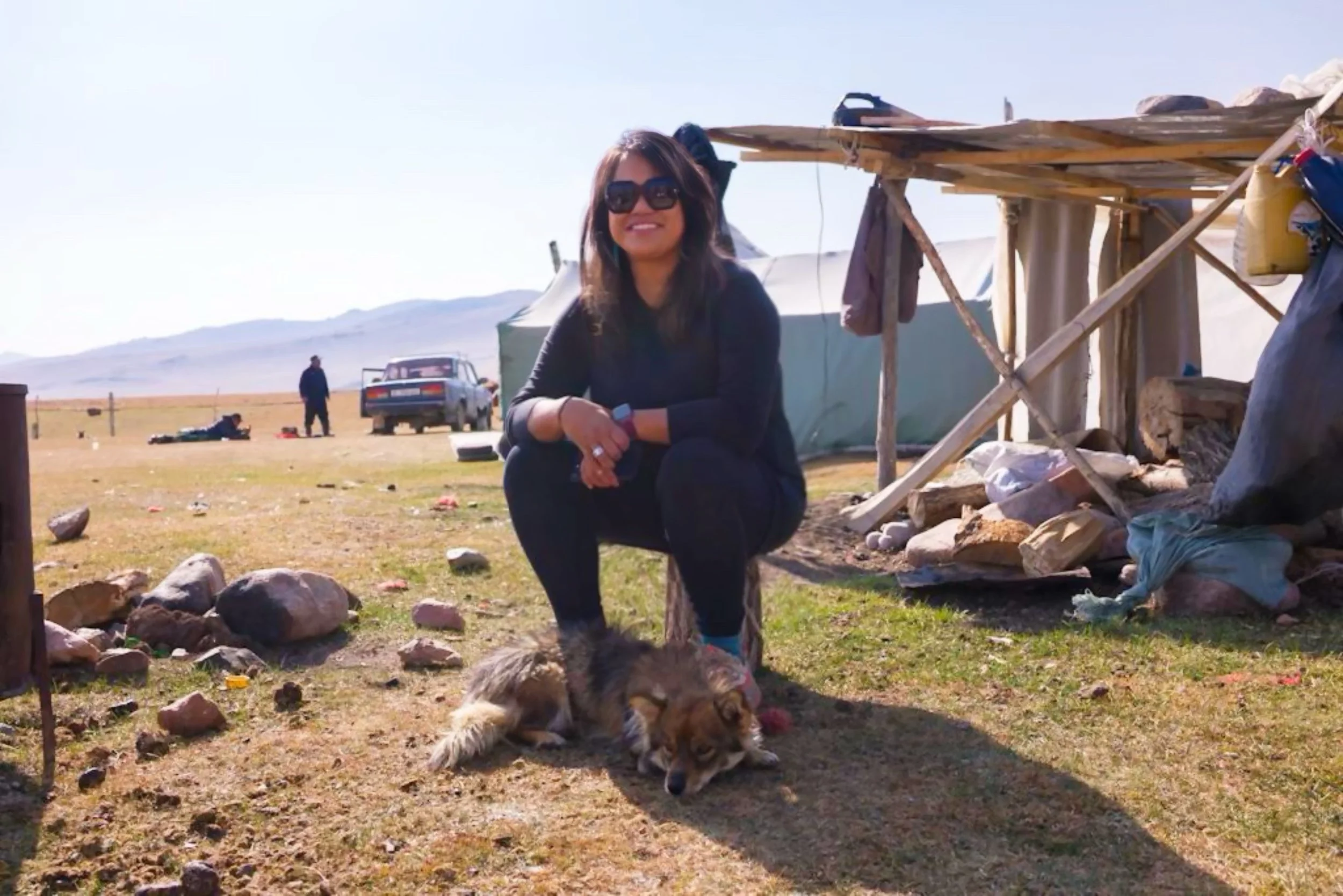
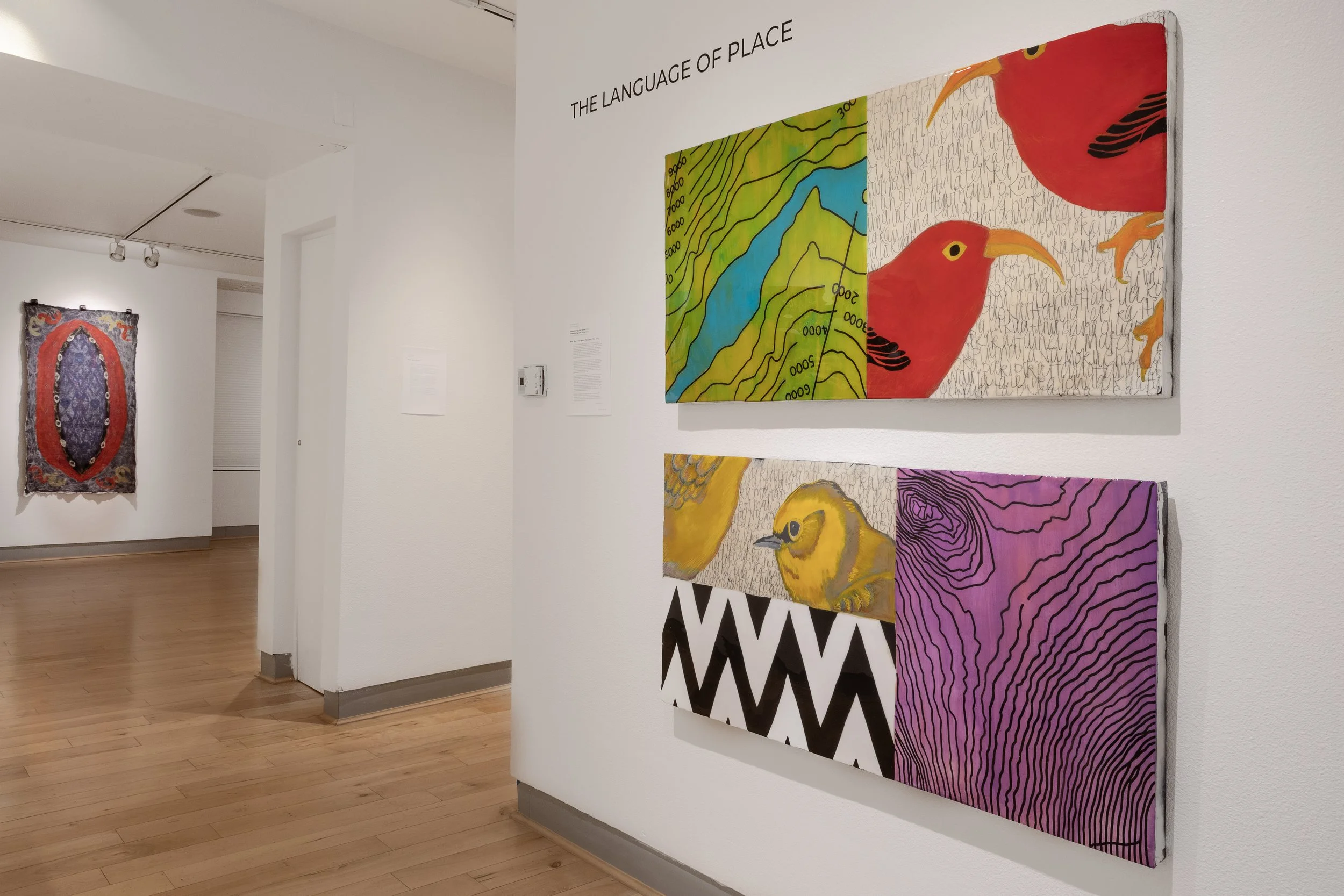
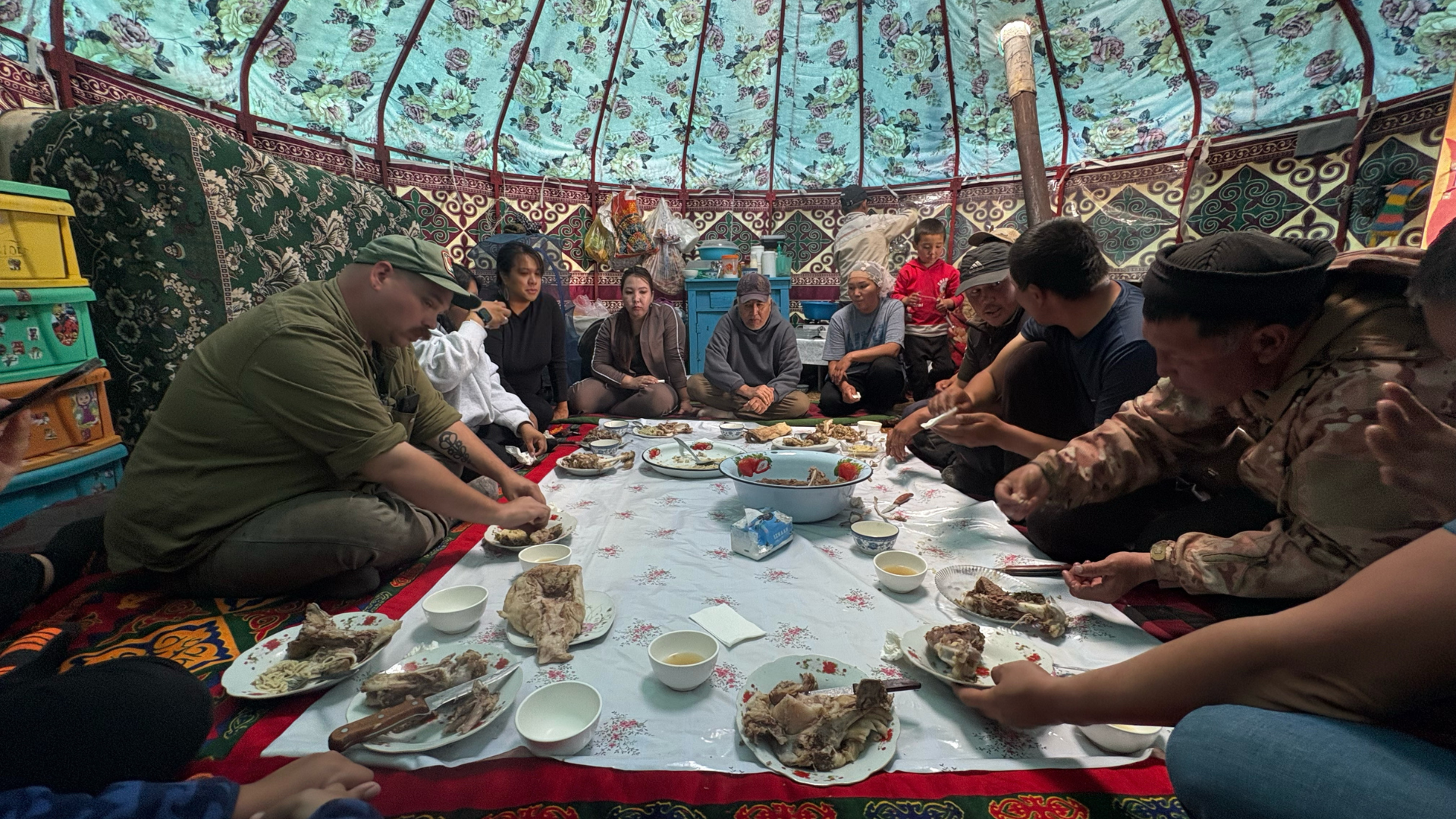
Her current research project, THE LANGUAGE OF PLACE: FROM NOMADIC EXCHANGE TO FUTURES OF MEMORY AND LAND, will culminate in an exhibition at the Institute of American Indian Arts Museum of Contemporary Native Arts in 2028. The project examines histories of Indigenous transnational exchange connecting Central Asia, Native North America, and the Pacific. Through sustained research and engagement with artists and communities, Brandow investigates how knowledge travels across territories and how cultural memory is preserved, transformed, and renewed through movement. The project considers land not as a passive setting for human activity but as a living presence and active source of knowledge. By bringing together artistic practices shaped by distinct yet resonant relationships to territory, migration, material culture, and memory, Brandow creates a framework for understanding place as relational rather than solely geographic. Within this framework, land holds histories, obligations, and forms of intelligence that continue to inform contemporary cultural production.
Brandow’s artistic and curatorial practice is rooted in Indigenous knowledge systems, land-based epistemologies, and the enduring relationships among people, place, and cultural memory. Drawing from her Diné and Kānaka Maoli heritage, she approaches art and exhibition-making as relational practices through which ancestral knowledge, contemporary experience, and collective futures may be brought into dialogue. For Brandow, knowledge is not abstracted from the environments or communities in which it is formed. It emerges through relationships with land, language, family, material, ceremony, and lived experience. Her work therefore resists curatorial approaches that detach cultural objects from the systems of responsibility, memory, and exchange that give them meaning. Instead, she creates exhibitions as sites of gathering. Artists, communities, objects, stories, and territories are brought together through carefully developed relationships rather than positioned within a singular institutional narrative. This methodology allows knowledge to remain embodied, situated, and responsive to the cultural protocols surrounding it.
Reciprocity is central to Brandow’s practice. Rather than treating research as a process of extracting information, she considers what curators, institutions, and audiences must offer in return for the knowledge and experiences they receive. This may involve long-term engagement, transparency, shared authority, appropriate forms of acknowledgment, or support that continues beyond the duration of an exhibition. Care, within this framework, is not simply an expression of sensitivity. It is an active structure of accountability. Brandow’s projects ask how exhibitions can respect the sovereignty of artists and communities while addressing the unequal power dynamics through which Indigenous art has historically been collected, categorized, exhibited, and interpreted.
Her work challenges institutional traditions that have positioned Indigenous cultures as subjects of anthropological study or as remnants of a distant past. By foregrounding living artists and evolving knowledge systems, she presents Indigenous contemporary art as intellectually, materially, and politically expansive. Tradition and experimentation are not treated as opposing forces but as interconnected modes through which culture remains active. As Brandow explains, her practice seeks to “prioritize Indigenous perspectives in the creation of ethical and sustainable forms of artistic expression.” This principle informs both the content of her projects and the processes through which they are developed. Indigenous perspectives are not added to an existing institutional framework but become the foundation from which the framework itself is reconsidered.
Her artistic philosophy similarly reflects “a culmination of honoring our traditional knowledge while exploring new materials, concepts, and approaches to making art.” This relationship between continuity and experimentation is essential to her work. Ancestral knowledge provides a living foundation from which new visual languages, materials, technologies, and forms of collaboration can emerge.
Brandow’s research frequently traces networks of Indigenous movement and exchange across Native North America, the Pacific, and Central Asia. These geographies are connected through distinct histories of migration, nomadism, trade, colonization, ecological adaptation, and cultural continuity. By placing them in conversation, she considers how Indigenous peoples have sustained relationships and transmitted knowledge across great distances. These exchanges complicate conventional maps of cultural influence, which often center colonial borders, nation-states, or Western narratives of globalization. Brandow instead foregrounds Indigenous geographies shaped by waterways, seasonal movement, trade routes, kinship systems, oral histories, and reciprocal relationships with land.
Brandow’s curatorial approach allows these distinct visual and cultural languages to coexist without being collapsed into a universal Indigenous experience. While her projects identify meaningful relationships across communities, they also preserve the specificity of individual histories, protocols, and systems of knowledge. This balance between connection and difference is central to her methodology. Transnational exchange does not erase local identity. Instead, it reveals how cultural practices can remain deeply grounded in place while also participating in broader networks of movement and relation. Memory similarly functions as a living and active force throughout Brandow’s work. It is not understood solely as an account of the past but as a means of navigating the present and shaping the future. Cultural memory is carried through language, visual forms, embodied practices, stories, materials, and relationships between generations. Her projects consider how this memory persists despite displacement, assimilation, environmental disruption, and the interruption of traditional systems of transmission. Artistic practice becomes one means through which fragmented knowledge may be renewed, reinterpreted, and shared without being separated from its cultural responsibilities.
Brandow’s work in design extends these concerns into the field of visual communication. Through projects such as DESIGNED TO BE RED: INDIGENOUS GRAPHIC DESIGN, she examines how Indigenous designers have used typography, symbols, printed matter, branding, political graphics, and digital platforms to communicate identity and assert cultural sovereignty. Graphic design becomes a particularly important site of inquiry because it shapes how communities are represented both internally and publicly. Indigenous design practices may communicate across languages and audiences while resisting stereotypes imposed by commercial, governmental, or institutional systems.
Education is another integral dimension of Brandow’s work. As an educator, she creates environments in which students and collaborators can examine the relationships among creative practice, cultural identity, land, and institutional power. Learning becomes a reciprocal process grounded in exchange rather than the one-directional transmission of authority. Across her practice, Brandow advocates for structures that allow Indigenous artists and communities to define how their work is understood, contextualized, and supported. This includes reconsidering authorship, ownership, interpretation, and access, as well as recognizing that some forms of knowledge may require cultural protocols that exceed conventional institutional practices.
Her methodology proposes an expanded role for the curator: not as an unquestioned authority, but as a facilitator, listener, researcher, collaborator, and steward of relationships. Curatorial work becomes an ongoing responsibility to the people, places, and forms of knowledge that make an exhibition possible.
Our Foundation’s fellowship will support Brandow’s research and the continued development of THE LANGUAGE OF PLACE: FROM NOMADIC EXCHANGE TO FUTURES OF MEMORY AND LAND. This support will enable sustained engagement with artists, communities, archives, and cultural knowledge holders across the regions central to the project.